Dream Stalker

by Amy Hopkins
Reviewed by SA

It’s Saturday! Which means I’m going to share with you a fantastic self published book and give you your next favorite binge read. This week, we all need a little more magic in out lives, so I’m going to tell you about a series I adore: Talented, by Amy Hopkins. The first installment, Dream Stalker, perfectly blends a murder mystery with a divided magical world.

Summarydreamstalkernewblack
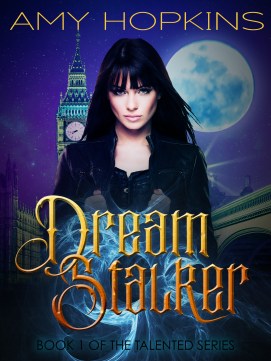
All Emma wanted was to sell her enchanted teas in peace; instead, she’s caught up in the chase for a killer who’s stalking the streets of London. He’s targeting half-bloods, people with limited magical ability. People just like Emma. The police are baffled by the long string of deaths, but they’re not willing to put in the legwork to make an arrest. After all, magic users can take care of themselves, right? Except, those with real power don’t give a damn about half-bloods. So, when Emma wakes from a strange dream that nearly gets her killed in the waking world, she knows she has to deal with it herself. With only her boggart shop-assistant and the two strange men who have offered to help, can she thwart the killer and make the city safe again?

In universe of Talented is just like ours, only with one small change: some people have magic. Oh, and there are the Fae. There are those with magic – the eponymous Talented – those without – mere mortals like us – and finally, the half-bloods, or half talents. With one magical parent, they have enough magic in their system to be considered above the mortals, but are shunned by the elitist Talented society. Caught in the middle, it’s hard to make do.

Emma is a fantastic character who captures this divide in society. She integrates herself in the community by fashioning magical teas, which she sells to mortals, fae, and talented alike. She’s got her trusty dog by her side, as well as Gibble, a boggart indentured to her family. So when she’s almost murdered in her sleep, she takes it upon herself to find who’s been trying to kill half-bloods before it’s too late.

What I love about her is just how darn relatable she is. At moments I felt like I was looking in a mirror. She’s kind, but a bit of a badass when she has to be brave. She loves her dog more than anything and is ruthless when it comes to finding the truth. Even when the secrets she needs to uncover have something to do with her…

The mystery is really fascinating and gripping. You really get pulled along for a wild ride, spanning across the city and another universe as well! Like a good Sherlock Holmes mystery, you can put the pieces together yourself if you’re paying close attention, and yet the ending and the reveal still manage to surprise you.

Hopkins has really managed to create a universe which feels real and plausible while at the same time capturing that little sense of wonder that made Harry Potter so much fun to read as a kid (and even now). A world in which Magic and Mortals walk side by side, but maybe not always with such enthusiasm. A world in which people born into both belong in none.

This is a strong start to what I feel is going to be a fantastic series. A lot of questions are answered but many are not, relationships are formed and may grow stronger, secrets are revealed that makes you wonder what’s going to happen next.

All books are available online, starting with the first one, right here!
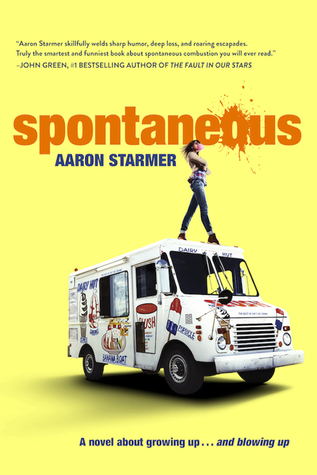
 

Spontaneous

by Aaron Starmer
Reviewed by SA

When I started this book, I was laughing every five seconds. When I finished it, I was in tears. There’s just so much to say about Spontaneous, so much that makes me want to shove it at friends and tell them to read it now. It’s a brilliant, touching book which I can’t believe affected me so much.

Summary

23587115Mara Carlyle’s senior year is going as normally as could be expected, until—wa-bam!—fellow senior Katelyn Ogden explodes during third period pre-calc.

Katelyn is the first, but she won’t be the last teenager to blow up without warning or explanation. As the seniors continue to pop like balloons and the national eye turns to Mara’s suburban New Jersey hometown, the FBI rolls in and the search for a reason is on.

Whip-smart and blunt, Mara narrates the end of their world as she knows it while trying to make it to graduation in one piece. It’s an explosive year punctuated by romance, quarantine, lifelong friendship, hallucinogenic mushrooms, bloggers, ice cream trucks, “Snooze Button™,” Bon Jovi, and the filthiest language you’ve ever heard from the President of the United States.

When seniors at Covington high start spontaneously combusting – more like, spontaneously exploding – life starts falling apart. No one knows what’s setting people off, what’s safe and who’s next. It’s a little hard to keep things together when you could be a pile of goop one second later.

Mara takes it all in stride. A witty, intelligent young woman, her perspective on the disaster is incredibly refreshing. She’s not a moper, instead she tells the story as it is, infusing the horror with funny moments and sharing a memory worth having of the person who just departed. She’s incredibly relatable, one of the most human YA women I have ever read, and I found myself reading thoughts of hers and wondering if the author somehow saw into my brain. So many of my fears and anxieties ring true through Mara’s point of view.

She’s not perfect, she’s incredibly human, and I think that’s why she’s so much fun to read. She’s also snarky and crass. She swears a lot and lives a very healthy sex life. She deals with this dark subject in her own way, mourns without tears, and suddenly you’re wondering why it’s so funny. How can it be so entertaining?

You begin to really care about the people in the novel. Mara and Tess have such a fantastic friendship, and I’m a sucker for well written girl friendships. Dylan, the romantic interest, is such a fascinating and complex character. Their relationship is far from perfect, and I think we need more imperfect couples in our lit.

But here’s the thing: two thirds of the way into the book, there’s a twist that made me actually scream out in anger. And then everything just falls apart. I was going to talk about great adults for the seniors to look up to and trust, but no, they’re all assholes. I was going to talk about growth, but growing up also means growing apart. The author is constantly reminding us that life can change spontaneously, and that it doesn’t care at all.

Spoiler alert: you won’t get any catharsis from this novel.

The blurb says: Aaron Starmer rewrites the rulebook with Spontaneous. But beneath the outrageous is a ridiculously funny, super honest, and truly moving exemplar of the absurd and raw truths of being a teenager in the 21st century . . . and the heartache of saying goodbye. I Think it’s also the heartache of not being able to say goodbye. Of not being able to do what you think you’re supposed to. One of the hardest parts of growing up is learned that you can do everything right and still fail: that life owes you nothing. This book is a powerful reminded of that.

Spontaneous is the most human novel I’ve read in a long time. A book where I have so many questions left unanswered, and I’m going to have to live with that. A book that broke my heart and has me constantly looking over my shoulder in fear of the unexpected happening and taking everything away.

It’s also a book with characters that don’t fall into single categories. A book where everything is unpredictable. A book where you’re laughing out loud at moments that are grim and morose because Mara’s reaction scares even herself.

Yes, I absolutely loved it.

Thank you Penguin Teen for sending me a copy to review. You’re the best.

IRIS – Interview with ANDREW GATES

by Andrew Gates
Reviewed by SA

I have a special treat for you today! There’s a new book about to hit the shelves, and I just can’t wait to tell you about it. Iris is the science fiction novel you’ve been waiting for without knowing it: with the scope of Game of Thrones, and the feel of Asimov, it’s destined to become your new SciFi addiction.

irisebookSummary

The Surface was just ancient history…

Year 200, Atlantic Federation Calendar. It has been two full centuries since the surface of the Earth was destroyed and humanity retreated to the bottom of the ocean. No one is old enough to remember the world outside the station they now call home. Life is peaceful in this artificial world. There is no war. Crime is low. But questions are raised once an experimental submarine is attacked during a routine test mission. The enemy is unknown. There are no leads. For the first time in generations, a long isolated city will have to confront what may lurk above the surface.

This multiple POV novel is the perfect simmering science fiction thriller. Its character driven plot is brilliantly executed: the novel reads differently depending on who you follow, and who you want to believe. For some, the Atlantic station is corrupt and full of government cover-ups. For others, it’s just home. Good and evil depends entirely on who’s talking.

The worldbuilding here is remarkable. You begin to really imagine what life is like in this secluded base on the bottom of the ocean floor. At moments, it was claustrophobic, while at others it is a world of endless possibilities. The author fantastically shows us different lives down in the station, and through them we live this new, odd life.

But what if no-one knew the truth? A mystery simmers below the surface. What has attacked the sub? Is the Atlantic Federation good or corrupt? And where are the other stations that are supposedly down here with them?

I have to say, I love a good mystery. This novel is a killer thriller and the ending had me begging for more. So many questions left unanswered!

Luckily, some questions we might get answers for: I had the great privilege of interviewing author Andrew Gates about his upcoming release, and his plans for the sequels.

screen-shot-2016-09-09-at-6-17-31-pm

An Interview with Andrew Gates

Readcommendations: Let’s start at the very beginning. Your novel is incredibly unique, combining some great SciFi concepts with exciting new ideas. Where did the concept for IRIS come from?

author-photoAndrew Gates: Great question! I haven’t actually gone into this yet with anyone.

The idea originally came to me when I was in middle school, if you can believe it. Back then the story was called Atlantis. A lot of it was the same. The main character was named Iris. She was a teacher. She lived in an underwater city in the future. The story only got to be like 8 pages or so. It didn’t really go that far. For years the idea was dormant.

In my senior year of college, I learned an interesting piece of trivia. Apparently, in ancient cultures all across the world, no matter where you are, the last color to get a word was always blue. You could be in ancient Egypt, Aztec, China, wherever. The last color to get a word was always blue. It’s the color that appears the least in nature, and even though it’s in the sky, ancient people would see the sky as nothing. The sky was like the absence of color. In fact, there are studies where they’ve found these isolated tribes in modern day and they’ve shown these tribes the color blue and asked them what it looks like and these isolated people don’t see it as anything different than green. But once these isolated people are told it’s blue, suddenly they can see it as its own color. So essentially, researchers have discovered that cultures can’t seem to identify colors until they have a word for it. I thought this was really interesting.

So I took this piece of trivia and I thought, what if in the future, our technology might move forward, but our general understanding of the world goes backwards? What better way to illustrate that than an advanced underwater city where nobody can identify the color blue? So then I started remembering this old story from middle school that never got off the ground and started to revisit this concept, only with the focus shifting. The color blue isn’t mentioned throughout the book, save for the final chapter. That’s why the series title is The Color of Water and Sky. It’s really all about the color blue, but not overtly so.

R: It’s such a dense novel, with so much going on! Can you describe the book in one sentence?

AG: Oh boy. It’s hard to do that without providing any spoilers. There’s an underwater city in the future and the people who live there think they’re safe, but now they may not be.

R: Coffee, or tea?

AG: Beer.

R: There seems to be an eternal struggle between “Traditional” publishing and then self publishing. How did you decide to self publish?

AG: I did a lot of research on that. My biggest hesitancy with trying to find an agent and publicist was that I would have to make a lot of edits. From what I could tell, it’s easier to keep the story the way I want it if I self-publish. I didn’t want a whole lot of people telling me how to change my story. I wanted it to be mine.

R: With a lot of different perspectives in the novel, there’s bound to be some favorites and least favorites. Who’s your favorite character from Iris, and why?

AG: Either Tracey or Sanja. Tracey is a paranoid anarchist. He’s a drunkard, blue collar guy. Sanja, on the other hand, prides herself on being part of the elite, where she feels in control. And interestingly, even though they’re enemies, they’re so similar. I think that’s the coolest thing about writing these characters. They’re so similar yet they think they’re so different. Anytime someone compares one of them to the other, they get so offended. Tracey is obsessed with anarchy and rebellion and Sanja is obsessed with totalitarianism and order. On paper, they might not seem the same, but they really are. They’re both skeptical of things that they shouldn’t be. They’re both worried about everything. And they can’t stand not being in control of the situation.

R: They were my favorite too. They’re incredibly complex characters, and the chifts in perspective make them such complicated people. But I’m getting off topic! What are your plans for the series?

AG: For a long time, I did not have an answer for this question. It’s only within the last few days actually that I have an answer. Everything I’m about to say is tentative and might completely change, but right now here is my plan: This part is kind of spoilery, so look away and skip to the next question if that’s your thing.

My original plan, back when I was just starting to write Iris, was to have four books. Iris was going to be the series name, not the book name. I was going to do four names that are single-syllable words starting with S. It would have been Iris: Sea, Stone, Sky and Space. But obviously that’s not what I decided to do. I abandoned that idea pretty quickly. I didn’t know how many books it was going to be after that idea, but within the last few days, I think I’ve settled back on four again. The tentative names are Iris, Kholvaria, Veznek and Hive. The scope of the story gets bigger and bigger with each book. It starts off very small and tight. The whole first book is in this small contained city. But as the series goes on, it’s going to get more and more expansive until we have an enormous world to play in.

R: That ending though… The second I put it down, I wanted more. So tell us, what can we expect from the sequel?

AG: You can expect the sequel to be a bit shorter and faster paced. Most of the questions you’re left with at the end of the first book are answered pretty quickly in the second book. Those that aren’t answered early on will be answered in book 3. The scope of the story opens up a lot and we see that there’s a pretty big conflict happening globally that the Atlantic Federation has been wholly unaware of. You can expect a lot of characters to return, even some you may have believed dead. We will also get a brand new perspective character, who I’m guessing might become my new favorite.

R: I hope we won’t have to wait long for the next book?

AG: It took me about two years to write Iris and another several months to do editing, promotional stuff, proofs, art and so forth. I expect the next book will take considerably less time.

Are you excited yet? Check out the official page for ore information, as well as the release date. If you’re a fan of hardcore science fiction, then you’re going to love The Color of Water and Sky!

Labyrinth Lost + GIVEAWAY

A follow up to our post from last week about how much I ADORED Labyrinth Lost By Zoraida Córdova. Check out our full review here This time, there’s a giveaway in which you can win copies of Labyrinth Lost and signed bookmarks! 

27969081Summary:

Nothing says Happy Birthday like summoning the spirits of your dead relatives. 

Alex is a bruja, the most powerful witch in a generation…and she hates magic. At her Deathday celebration, Alex performs a spell to rid herself of her power. But it backfires. Her whole family vanishes into thin air, leaving her alone with Nova, a brujo boy she can’t trust. A boy whose intentions are as dark as the strange marks on his skin.

The only way to get her family back is to travel with Nova to Los Lagos, a land in-between, as dark as Limbo and as strange as Wonderland… 


Head on over here to pick up your own Labyrinth Lost Coloring Page!

http://www.sourcebooks.com/images/LabyrinthLost-ColoringPage.pdf 

1

Follow our voices, sister.

Tell us the secret of your death.

—-Resurrection Canto,
Book of Cantos


Earlier that day, my mom had warned me, pressing a long, red fingernail on the tip of my nose, “Alejandra, don’t go downstairs when the Circle arrives.”
he second time I saw my dead aunt Rosaria, she was dancing.

But I was seven and asked too many questions. Every Sunday, cars piled up in our driveway, down the street, and around the corner of our old, narrow house in Sunset Park, Brooklyn. Mom’s Circle usually brought cellophane–wrapped dishes and jars of dirt and tubs of brackish water that made the Hudson River look clean. This time, they carried something more.

When my sisters started snoring, I threw off my covers and crept down the stairs. The floorboards were uneven and creaky, but I was good at not being seen. Fuzzy, yellow streetlight shone through our attic window and followed me down every flight until I reached the basement.

A soft hum made its way through the thin walls. I remember thinking I should listen to my mom’s warning and go back upstairs. But our house had been restless all week, and Lula, Rose, and I were shoved into the attic, out of the way while the grown–ups prepared the funeral. I wanted out. I wanted to see.

The night was moonless and cold one week after the Witch’s New Year, when Aunt Rosaria died of a sickness that made her skin yellow like hundred–year–old paper and her nails turn black as coal. We tried to make her beautiful again. My sisters and I spent all day weaving good luck charms from peonies, corn husks, and string—-one loop over, under, two loops over, under. Not even the morticians, the Magos de Muerte, could fix her once–lovely face.

Aunt Rosaria was dead. I was there when we mourned her. I was there when we buried her. Then, I watched my father and two others shoulder a dirty cloth bundle into the house, and I knew I couldn’t stay in bed, no matter what my mother said.

So I opened the basement door.

Red light bathed the steep stairs. I leaned my head toward the light, toward the beating sound of drums and sharp plucks of fat, nylon guitar strings.

A soft mew followed by whiskers against my arm made my heart jump to the back of my rib cage. I bit my tongue to stop the scream. It was just my cat, Miluna. She stared at me with her white, glowing eyes and hissed a warning, as if telling me to turn back. But Aunt Rosaria was my godmother, my family, my friend. And I wanted to see her again.

“Sh!” I brushed the cat’s head back.

Miluna nudged my leg, then ran away as the singing started.

I took my first step down, into the warm, red light. Raspy voices called out to our gods, the Deos, asking for blessings beyond the veil of our worlds. Their melody pulled me step by step until I was crouched at the bottom of the landing.

They were dancing.

Brujas and brujos were dressed in mourning white, their faces painted in the aspects of the dead, white clay and black coal to trace the bones. They danced in two circles—-the outer ring going clockwise, the inner counterclockwise—hands clasped tight, voices vibrating to the pulsing drums.

And in the middle was Aunt Rosaria.

Her body jerked upward. Her black hair pooled in the air like she was suspended in water. There was still dirt on her skin. The white skirt we buried her in billowed around her slender legs. Black smoke slithered out of her open mouth. It weaved in and out of the circle—-one loop over, under, two loops over, under. It tugged Aunt Rosaria higher and higher, matching the rhythm of the canto.

Then, the black smoke perked up and changed its target. It could smell me. I tried to backpedal, but the tiles were slick, and I slid toward the circle. My head smacked the tiles. Pain splintered my skull, and a broken scream lodged in my throat.

The music stopped. Heavy, tired breaths filled the silence of the pulsing red dark. The enchantment was broken. Aunt Rosaria’s reanimated corpse turned to me. Her body purged black smoke, lowering her back to the ground. Her ankles cracked where the bone was brittle, but still she took a step. Her dead eyes gaped at me. Her wrinkled mouth growled my name: Alejandra.

She took another step. Her ankle turned and broke at the joint, sending her flying forward. She landed on top of me. The rot of her skin filled my nose, and grave dirt fell into my eyes.

Tongues clucked against crooked teeth. The voices of the circle hissed, “What’s the girl doing out of bed?”

There was the scent of extinguished candles and melting wax. Decay and perfume oil smothered me until they pulled the body away.

My mother jerked me up by the ear, pulling me up two flights of stairs until I was back in my bed, the scream stuck in my throat like a stone.

Never,” she said. “You hear me, Alejandra? Never break a Circle.”

I lay still. So still that after a while, she brushed my hair, thinking I had fallen asleep.

I wasn’t. How could I ever sleep again? Blood and rot and smoke and whispers filled my head.

“One day you’ll learn,” she whispered.

Then she went back down the street–lit stairs, down into the warm red light and to Aunt Rosaria’s body. My mother clapped her hands, drums beat, strings plucked, and she said, “Again.”

LabyrinthLost

And now, the moment you’ve all been waiting for… Rafflecopter Giveaway Link for 2 Copies of Labyrinth Lost with Signed Labyrinth Lost Bookmarks!

Runs September 6-September 19 (US & Canada only)

zoraida-head-shot About the Author:

Zoraida Córdova was born in Ecuador and raised in Queens, New York. She is the author of the Vicious Deep trilogy, the On the Verge series, and the Brooklyn Brujas series. She loves black coffee, snark, and still believes in magic. Send her a tweet @Zlikeinzorro or visit her at zoraidacordova.com.

I think you all are really going to love this novel. I sure did!


Labyrinth Lost

By Zoraida Córdova
Reviewed by SA

I just finished reading what must be the best YA novel I have read in ages – possibly, ever, but I know I say that I lot and I don’t want to diminish the amazingness of this novel – and I just could not wait another second to tell you about it. Mark your calendars for September 6th, because Labyrinth Lost is coming out and you have to read it right away.

Summary27969081

Nothing says Happy Birthday like summoning the spirits of your dead relatives.

Alex is a bruja, the most powerful witch in a generation…and she hates magic. At her Deathday celebration, Alex performs a spell to rid herself of her power. But it backfires. Her whole family vanishes into thin air, leaving her alone with Nova, a brujo boy she can’t trust. A boy whose intentions are as dark as the strange marks on his skin.

The only way to get her family back is to travel with Nova to Los Lagos, a land in-between, as dark as Limbo and as strange as Wonderland…

Where to start with this novel? Alex is a young woman from Brooklyn who harbors incredible magic. But not only does she hate magic, she’s afraid of her own power, keeping it locked away for years until it bursts out in dangerous ways. While the rest of her family has incredible gifts which stem from love, Alex’s power seems raw and dangerous, and she knows she has to get rid of it. When she accidentally banishes her entire family to another dimension, her power might be the only thing that can get them back.

It’s a novel about family, about growth, about love. About how you don’t know how much you truly love something or someone until it’s gone. It’s a quest, an adventure, a modern day take on a story you would hear while sitting next to the fire, as your grandmother tells you about powerful young women and magic. It’s an instant classic.

The worldbuilding here is exquisite. The author does an incredible job of creating this universe and feeding us information without lugging us down with exposition. It’s a masterful example of “show, don’t tell” at work. She crafts a beautiful world of magic and a rich culture based on latin witch magic, with brujas and brujos, Deos and demons.

The characters themselves have such depth and complexity to them. Alex is not some whiny girl who doesn’t want her powers: she’s got valid reason to fear what she can do, and is able to grow into someone not to be trifled with. Nova is mysterious and intriguing, hiding secrets which slowly trickle out. And Rishi is just incredible, she’s a person I would love to have in my life. Not to mention Rose and Lula, Alex’s sisters, who are banished to Los Lagos: we learn so much about them int he first chapters that we feel attached, and we urge Alex to hurry up and rescue them already.

One of the best parts is something which might spoil a bit of the novel, so if you don’t want that, skip this paragraph. But something I noticed early on is how everyone was into Nova, and I realized that Alex wasn’t saying anything about his attractiveness or anything. It seemed logical for him to be the love interest, but I felt no chemistry and was getting worried about where we were headed. And then Rishi returns to the plot, and I start thinking just how great there are together. One thing leads to another, and now I’m sitting here gleefully giggling and happy. Heck yes!

All in all, I just want to say how great this novel is. I thought it was a standalone, the way the story wraps up nicely and felt so perfect, but I’m excited to see it’s marked as Book 1 on goodreads, which means there’s more to come! So if you want magic and adventure, make sure you read Labyrinth lost.

Our September 6th by Sourcebooks Fire.

LabyrinthLost

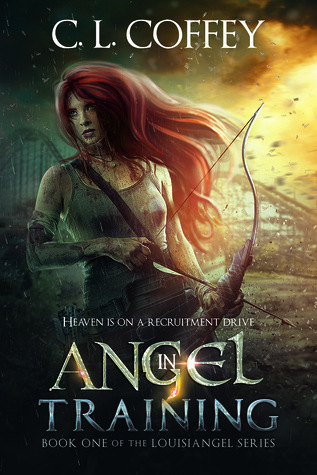
Angel in Training

by C.L. Coffey
Reviewed by SA

Oops, I’m late for self published Saturday! Life has been hectic around here, but never too much for a good book. And this week, I’m proud to present a fantastic debut novel by Indie author C.L. Coffey: Angel in Training, the first of the Lousiangel series. If you like angels, badass heroines, dashingly handsome men and clever twists on classic tropes, you’re going to want this book.

Summary23515866

After a night out turns fatal, a misunderstanding with the Archangel Michael presents Angel with a chance at Eternal Life: the opportunity to earn her wings and one day become an archangel herself.

Angel is given the task of protecting her charge, trainee detective, Joshua Walsh. There’s no denying the attraction between Angel and Joshua, only Michael has pretty strict rules: no drinking, no drugs, and certainly no relationships with humans. Thankfully, she’s got other things to deal with, like trying to convince Joshua New Orleans has a serial killer who is preying on other angel potentials like herself.

Angel must quickly learn that when keeping someone safe, doing the right thing is not always the easiest, especially when you’ve got an archangel looking over your shoulder.

It’s not easy waking up to discover you’re dead. Not only that, but you’re now an angel – well, an angel potential – names Angel, which makes things a little complicated. Top it off with a celestial war you’ve been thrown into, and, oh, did I forget to mention it’s no sex or alcohol? Angel seems to have gotten the short end of the straw, and she’s not too happy about it.

That’s probably what makes her such a great character. She doesn’t fall into Mary Sue-vil and doesn’t suffer from special snowflake-itis, she’s just a real girl facing a really weird situation and reacting probably just like you or I would. She slowly grains her powers and grows into them, which adds to the plot while only making us like her more.

However, the stand out I think were the background characters. Cupid is hilarious. He’s funny, he’s sassy at times, not afraid to speak his mind while also being a great friend to a recently angelified Angel. Plus, Joshua, the cop who’s now under Angel’s watch, is a man full of mystery and questions. He humanizes the novel and makes a perfect foil to Angel.

Plus, the location was fascinating: we’re in New Orleans, which is still recovering from Katrina, and the writing makes you feel like you’re actually there. You get to go bar hopping, you get to learn about the local culture and cuisine, and the place itself is such an interesting place for the plot. It’s perfect.

For fans of romance, there’s a hint of some relationships growing in Angel’s life, even with her spontaneous vow of chastity. Michael, the attractive archangel who gave Angel eternal life, might be hiding some feelings of his own. And Joshua, Angel’s charge? He’s not hiding anything.

The ending felt a little weird to me: an exciting climax to be sure, but a lot of exposition at the same time. Still, it made me desperately want to read the next book! I’m left with so many questions I want answers to, and I’m mostly hooked on Angel! I love her perspective and it makes the book a blast to read.

All in all: definitely a series to put on your to read list.  If you’re a fan of Supernatural, you’ll love this book.

A World Without You

By Beth Revis
Reviewed by SA

I’m a huge fan of Beth Revis – If you don’t know Across the Universe, check it out now – so when I saw there was a new novel of hers coming out, I pounced on it. Then I had to wait until I actually got home to read it, which is why this review is coming so much later than I had anticipated. In any case, I’m actually quite tired because I was up all night last night finishing it, and just could not put it down. So you’ve been warned!

Summary27272505

Seventeen-year-old Bo has always had delusions that he can travel through time. When he was ten, Bo claimed to have witnessed the Titanic hit an iceberg, and at fifteen, he found himself on a Civil War battlefield, horrified by the bodies surrounding him. So when his worried parents send him to a school for troubled youth, Bo assumes he knows the truth: that he’s actually attending Berkshire Academy, a school for kids who, like Bo, have “superpowers.”

At Berkshire, Bo falls in love with Sofía, a quiet girl with a tragic past and the superpower of invisibility. Soíia helps Bo open up in a way he never has before. In turn, Bo provides comfort to Sofía, who lost her mother and two sisters at a very young age.

But even the strength of their love isn’t enough to help Sofia escape her deep depression. After she commits suicide, Bo is convinced that she’s not actually dead. He believes that she’s stuck somewhere in time—that he somehow left her in the past, and that now it’s his job to save her. And as Bo becomes more and more determined to save Sofía, he must decide whether to face his demons head-on or succumb to a psychosis that will let him be with the girl he loves.

I absolutely love having this unreliable narrator. When I first read the premise, I believed the novel would be about trying to find reality: does Bo really have powers, or is he deluding himself? Is he right, or is everyone else? But the author makes it very clear where we stand… which means Bo’s perspective cannot be trusted: even though he’s the one telling us the story.

As the novel goes on, due to Bo’s growing psychosis, the story becomes more and more confusing: there’s missing time, jumping backwards and forwards, paranoia, two alternate versions of reality being told at once. Towards the climax of the novel, everything becomes erratic and all over the place, making it difficult to see what’s going on but masterfully growing the tension and the twists. Only a skilled author like Revis could pull off showing this loss of control (even as Bo struggles for just that) without turning it into a jumbled mess.

Bo believes his girlfriend, Sofía, is trapped in 1692 and that it is only through controlling his powers that she will be saved. He refuses to let go. It’s odd to think that for the entire novel, we never truly know Sofía: we get hints of what she struggles with through Bo (as he tells the parts he’s aware of, and what he believes he remembers) or through what the families are told. But her depression is just something Bo cannot grasp.

Every once and a while, Phoebe, Bo’s sister, gets a chapter of her own, from her point of view. It’s so weird to switch to such clarity of mind, and yet, we see she has struggles and confusion of her own to deal with. At first I didn’t get the point of having them, but then I started to see how important it was to see her view.  Kinda her in a nutshell: everyone’s always worrying about Bo, who has much bigger problems, that they fail to see her problems too.

As I said, I could not put this book down. The end was just so exciting, life and death, Bo on the edge, that I needed to keep reading. This book was fantastic. Such a great, brutal look at mental illness, at love and family and psychosis. To read NOW.

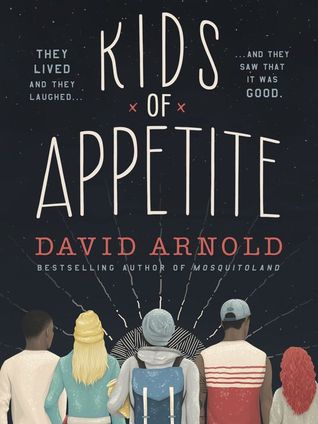
Kids of Appetite

by David Arnold
Reviewed by SA

When I saw a new book out by David Arnold, I pounced on it. Mosquitoland was an amazing novel and I knew his new book would not disappoint. No, Kids of Appetite was just as fantastic, maybe even more so. It’s a fantastic example of young adult fiction at its very best. This review is going to be rather long: I have so much to say about it. You’ve been warned!

Summary22466429

Victor Benucci and Madeline Falco have a story to tell.
It begins with the death of Vic’s father.
It ends with the murder of Mad’s uncle.
The Hackensack Police Department would very much like to hear it.
But in order to tell their story, Vic and Mad must focus on all the chapters in between.

This is a story about:

1. A coded mission to scatter ashes across New Jersey.
2. The momentous nature of the Palisades in winter.
3. One dormant submarine.
4. Two songs about flowers.
5. Being cool in the traditional sense.
6. Sunsets & ice cream & orchards & graveyards.
7. Simultaneous extreme opposites.
8. A narrow escape from a war-torn country.
9. A story collector.
10. How to listen to someone who does not talk.
11. Falling in love with a painting.
12. Falling in love with a song.
13. Falling in love.

Vic is was born with Moebius syndrome, an his face is paralyzed. But that’s not who he is, it’s just the first thing people see about him. Since he never gives off facial cues when he speaks, it gives off the impression he might not be listening. But he is: he might also be the smartest kid you will ever meet.

It’s been two years since his father passed away, and he’s not ready to let go yet. When his mother gets proposed to, he flees into the night with his father’s ashes. In his urn he finds a beautiful letter from his father to his mother, and discovers a secret message telling him what to do with the ashes. Aided by Mad, a young woman he falls hopelessly in love with, and her friends Coco, Baz and Nzutzi, who all live in a greenhouse together, they decide to fulfill his father’s dying wishes.

So why are they in a police station being interviewed about a murder?

There is just so much to love about this book. It’s just not *about* one thing, it’s a novel that covers just so much, with a scope so wide it captures the complexity of life itself. It’s a murder mystery. It’s a scavenger hunt. It’s a love story. Make that two love stories. It’s a book about abuse and violence. A book about following dreams and letting go of the past. It is, for all intents and purposes, the perfect storm of a novel.

When I first started reading it, I groaned internally. Sigh. Vic is one of those kids who’s ‘got a rare genetic condition but he’s so smart and loves really niche things! woopee!’ – so I assumed it would be like all the other YAs that fall into formula land and bore me to tears… and then, then, I started to love him. I started to relate to him. I saw he was not just a character or a plot point, but a person. I started to care. And then I cared about everyone. My gosh, how can these character have so much backstory and heart in such a small space?

Yes, there is a love story here: but the one that stood out to me was not Vic and Mad, but Vic’s parents. Oh my gosh, when we say #relationship goals, it’s them we’re thinking about. They really loved each other, and it brought me to tears knowing she losses him. Seeing Vic follow the clues his father left behind, going to places that meant something to his parents, and the love they had for each other, now that love was so amazing and pure that it made me want to know them.

Mad’s favorite book is the outsiders – a novel I loved in middle school, though not as much as she does – and it draws a lot of parallels with the story, both outspoken and unsaid. For example, the reminder that we all see the same sunset rang true, and was especially poignant when Baz recounted his escape from the Congo. However, it did remind me when I studied the book, and the message about “staying golden,” making me feel bad for the Kids of Appetite, especially Coco. Their childhood was taken away. Maybe living in a fairytale like greenhouse was a way to recapture it*.

The only fault I can find is that the message might be shoved down our throats. The author frequently repeats things (there’s a great quote I loved a lot the first time, might not as much the next two) and especially his message. He’s not very subtle. Actually when I found subtle things, a few lines or pages later he’d actually say them out loud. At times, it made me feel like the author was sitting next to me saying “you got that, right?”

I’m certain this will be required reading in high schools from now on. If a teacher were to tell me to write an essay about it, I could probably come up with seven different directions to go with it. I could talk about the Super Racehorse. I could talk about Love. I could talk about youth, innocence, and family, and so many more. Honestly, I cannot shut up about this book.

Thank you Penguin First to Read for the opportunity to get an advance copy of this novel. it comes out September 20th and you all know you need to read it, STAT.

*Now I want to study the symbology of the color green in this book. Dang.

Not So Much, Said the Cat

by Michael Swanwick
Reviewed by SA

I’m a sucker for short fiction done well, and so many of my Scifi loving friends have been recommending Swanwick to me over the years. So I thought, what the heck? Here’s a chance to read some – and the title’s not bad either. Oh boy, was I pleased.

Summary28592999

The master of short science-fiction follows up his acclaimed collection The Dog Said Bow-Wow with feline grace, precision, and total impertinence. Michael Swanwick takes us on a whirlwind journey across the globe and across time and space, where magic and science exist in possibilities that are not of this world. These tales are intimate in their telling, galactic in their scope, and delightfully sesquipedalian in their verbiage.

Join the caravan through Swanwick’s worlds and into the playground of his mind. Discover a calculus problem that rocks the ages and robots who both nurture and kill. Meet a magical horse who protects the innocent, a confused but semi-repentant troll, a savvy teenager who takes on the Devil, and time travelers from the Mesozoic who party till the end of time…

Wow, this man really knows how to write short fiction! Each story is exquisite, the perfect density of plot, carefully crafted, beautifully executed. I love these self contained universes that seem to extend beyond the small glimpse we see here, making me feel like I am both content with that I was given and yet dreaming of reading a full novel.

It’s inspiration fodder. The author never goes deep into exposition, meaning you have to work for the story you get, filling in the blanks, the aspects he doesn’t show you, as well as imagine the consequences at the end. It had my mind racing the entire time, and i might have gone “Woah”, “No way”, or gasped out loud more than a few times in reading it.

Most stories are Science fiction, some with more or less of a fantasy element to them. And while they’re all memorable, a few of them stood out to me: “Of Finest scarlet was her gown” – from which the title is extracted – tells the story of a teenger who must deal with the devil to get her father back. Brilliant story, completely unexpected, out of nowhere. Or “The She-Wolf’s Hidden grin”, in which two rich girls try to grow in a restrictive home while trying to discover if they have alien genes in their DNA. I don’t want to give anything away.

The author frequently returns to the theme of colonization (which is why some of his fiction reminds of of Bradbury, I think). In quite a few stories, we are either colonizing or have been colonized: we’re either living with the colonists, or being them ourselves, for better or for worse. Not everyone is always happy with the outcome, and sometimes revenge can take years to emerge. I loved how the author presented so many facets of this heavy problem.

All in all, a fantastic collection. Some are more memorable than others, and some will stay with you forever. Definitely a fantastic read.

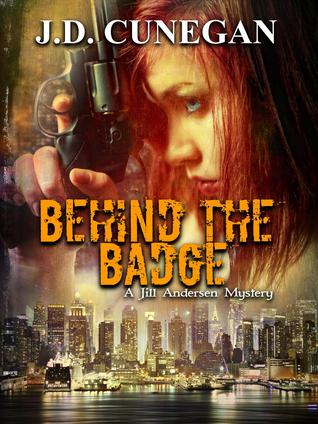
Behind the Badge

by J.D. Cunegan
Reviewed by SA

Gosh, I’m a huge fan of Jill Andersen mysteries. It fills the hole in my heart that the cancellation of Castle left there. A brilliant, fast paced crime novel with an amazing, asexual lead? What more could I want? The bounty series continues to be one of the most diverse and dynamic detective series I have ever read.

Summary30120290

For Jill Andersen, being part of the Baltimore Police Department has always been both a tremendous honor and a serious responsibility. Her father, before his fall from grace, had instilled in her a great respect for police and the work they do day-to-day. But when a teenage boy winds up dead on the outskirts of downtown Baltimore, Jill finds herself once again faced with those who would abuse their badges to fulfill personal agendas and uphold biases.

Jill still has a job to do, but she soon finds that not everyone is in her corner. For the first time in almost four years working Homicide, Jill finds herself at odds with people who claim to be on her side. From other cops to suits downtown all the way to the Mayor’s office, it becomes increasingly clear that Jill will need to rely on more than just her badge if she’s to solve this case.

But even if she finds justice, what’s the price?

I was wondering where the author would take us, after the storyline with Paul, Jill’s father, wrapped up in Blood Ties. This time he tackles an issue that is very much ingrained in our day to day: police discrimination, black lives matter, and corruption. He does so in a way that is incredibly powerful, reminding us that there are so many different people playing in that equation, and that good cops will try to do their job no matter what.

Jill faces up against a powerful opponent: her own superiors. Her own colleagues. When she tries to do her job by the books, hurdles keep getting thrown in her way. Luckily for her, she doesn’t always need to play by those books: her alter ego, Bounty, is used to taking justice into her own hands. And with her secret out to her closest friends, she’s got support from every direction. So why is it still so hard to bring criminals to justice?

I loved how the author tackled current issues: this series still happens to be one of the most diverse ones I’ve ever read, with different PoCs, genders, and sexualities all coming into play – just like in real life. It’s one of the reasons I love the Bounty series so much: it’s one of the most down to earth crime series I’ve ever read, even if the main character is basically a superhero. All the sub plots are great, making me feel like I’m watching a TV show, giving me glimpses into the lives of the minor characters, who each lead very complex lives as well.

However, I feel like it might not have been as good as the other books in the series. The plot was a little more drawn out and there was a little less growth from the characters. Jill’s own development was very impressive, but I didn’t feel as attached as I did in the previous novels. Still, it was a great read which made my commute to and from work something I would look forward to.

All in all, a great new installment of the Bounty series. And I can’t wait for more!