Lair of Dreams

by Libba Bray

Review by KM

A few weeks ago, I posted my The Diviners review. It was a repost from years ago when I originally got the book. My friends Laura and Kelly had gone to Book Expo America that year and picked me up a copy; I couldn’t be more grateful. The historical setting of the series mixes well with the supernatural elements. In the years since the first book came out, I have still only found a few historical novels that I truly love, but Libba makes it easy for me to add Lair of Dreams to the list.

Summary

After a supernatural showdown with a serial killer, Evie O’Neill has outed herself as a Diviner. With her uncanny ability to read people’s secrets, she’s become a media darling, and earned the title “America’s Sweetheart Seer.” Everyone’s in love with the city’s newest It Girl…everyone except the other Diviners.

Piano-playing Henry Dubois and Chinatown resident Ling Chan are two Diviners struggling to keep their powers a secret–for they can walk in dreams. And while Evie is living the high life, victims of a mysterious sleeping sickness are turning up across New York City.

As Henry searches for a lost love and Ling strives to succeed in a world that shuns her, a malevolent force infects their dreams. And at the edges of it all lurks a man in a stovepipe hat who has plans that extend farther than anyone can guess….As the sickness spreads, can the Diviners descend into the dreamworld to save the city?

Musings

I loved Evie in The Diviners and while she has a spot in my heart, it was certainly the other characters that kept me in love with Lair of Dreams. Evie takes a backseat role in this book (which is good because I really couldn’t have tolerated her being the main right now) and lets Ling take the spotlight. Ling is wonderful, in my opinion. I want more of her and I want more of her now.

Okay, now just a complaint that doesn’t have to do with the writing: The cover of The Diviners was something I had never seen before. It was an artistic style that looked stunning and original compared to everything else on the YA shelf. Lair of Dreams lost that. I don’t think this cover expresses the book at all and actually did a double-take when it came into the library. I’m so sad they couldn’t stick with the original art theme.

To be completely honest, I wasn’t as enraptured by Lair of Dreams as I was by The Diviners. While the first book was fast paced, this one went much slower. It was just as large, but I  found myself putting it down often, which was something I never could have done with The Diviners. It still had the same lovely 1920’s slang, the same wonderfully horrific monsters, and the characters I loved. It was just missing the action. I’ll definitely be preordering both the third and fourth novels in this series, but I’m hoping it didn’t peak with the first book.

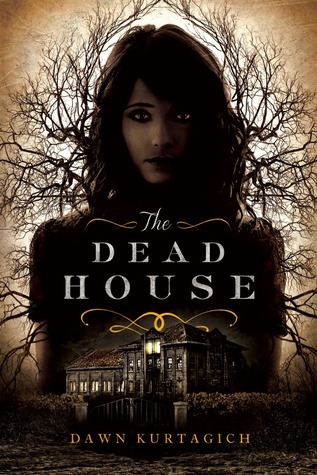
The Dead House

by Dawn Kurtagich

Reviewed by SA

Halloween may be over a month away, but one of the most thrilling, blood chilling, though provoking thrillers comes out today, September 15th. It’s one of the most maddening books I have ever read: part psychological thriller, part horror story, part ‘found footage’ if you will, The Dead House will have you checking behind you in the mirror, and leaving notes to yourself on purple post its. It’s terrifying… and electrifying.

Summary

Twenty-five years ago, Elmbridge High burned down. Three people were killed and one pupil, Carly Johnson, disappeared. Now a diary has been found in the ruins of the school. The diary belongs to Kaitlyn Johnson, Carly’s identical twin sister. But Carly didn’t have a twin . . .
Re-opened police records, psychiatric reports, transcripts of video footage and fragments of diary reveal a web of deceit and intrigue, violence and murder, raising a whole lot more questions than it answers.
Who was Kaitlyn and why did she only appear at night? Did she really exist or was she a figment of a disturbed mind? What were the illicit rituals taking place at the school? And just what did happen at Elmbridge in the events leading up to ‘the Johnson Incident’?

Carly and Kaitlyn are the same person. Only, they’re not. They may share the same body, but their minds are their own: Carly runs things the day, Kaitlyn the night. They were born like this, two souls sharing a body, and they are used to it. They love each other; they are sisters, after all. They write notes to each other to let them know about their day, to comfort and love the other. Of course, no one can know any of this: they wouldn’t believe them.

And nobody does: after their parents’ death, in an accident they cannot recall, they are places in a mental hospital, where Kaitlyn is repeatedly told she is Carly’s ‘Alter’, that she isn’t real, and that letting go will let her sister heal. Only Kaitlyn is having some problems of her own: hearing voices, seeing things, losing touch…

All this may sound like major spoilers, but it is all established int he first few pages of the book. It’s one of the things that make this novel so compelling: so many stories tucked into one. You have the two sisters in one body; but you also have the question of psychosis, weather any of that is true; and on top of that, the format of the novel, which reminds you there might be more to all this than any one person is seeing.

The novel itself is supposedly the compilation of diary entries, audio and video transcripts, interviews and sessions, all putting in order the events leading up to the looming ‘incident’: a fire that burns down the Elmbridge school, taking the lives of three people and injuring many others. Kaitlyn being the main suspect, it is her life is being pieced together: but how much of it are her real fears, and how much is just the ravings of a lunatic?

That’s what kept me reading the novel with such intensity: the what if. There was a sense, as you read this novel, that really nothing is as it seems. Is our narrator reliable or not? I’d like to say yes, but if I am wrong, then the repercussions on the story are endless. As the other characters join into Kaitlyn’s life, after certain events force her secret to be known to few, the plot becomes more intriguing as the suspect pull grows. The reader is constantly left wondering what is real, what is fake, who can be trusted, and who is not as they seem.

The format that makes the story so varied was a bit of a pain to read, at least in the edition I had. It took a little while to get used to, and I didn’t think it worked at first, especially the video recaps. (I mean, video in written form?). I either got used to it, or it really started working, because it stopped bothering me so much.

While Kaitlyn seemed so read as a character, written with such depth and dimension, that she brought the horror to life, some of the other characters felt a little flat. Anybody outside of Kaitlyn’s head, practically, except maybe Naida. Possibly because everything is either seen a) through Kaitlyn’s eyes, and she doesn’t always like people or b) by transcribing footage, which is impersonal or emotionless. I guess I can’t really blame the book for that!

But this is by far the spookiest book I’ve read in YA, by far. So many questions. Not enough answers! The ending had me clutching my e-reader in anticipation. I had to keep resetting my machine to make sure there weren’t any more pages left.

The Dead House comes out today in the USA. If you want something to keep you up at night, I definitely recommend it.

The Demon’s Lexicon

by Sarah Rees Brennan

Review by KM

I spent this week rereading some of my favorite books. It’s not a luxury I typically get. Just trying to stay on top of the new releases and generate ideas for YA programming at the library is tough, so this week was just wonderful. 

I noticed a horrifying gap in my YA section that needs to be rectified immediately. We’re missing Sarah Rees Brennan’s The Demon’s Lexicon series. How wrong is that? I feel like I’m committing a heinous act. These three books need to be available at my library (for those in town who want to get ’em out this week or they don’t have them at your local library? Ask about interlibrary loans. They’re fantastic and should be used often.)

Alright, I’m going to save my gushing for the musings section. Be prepared.

Summary 

Sixteen-year-old Nick and his brother, Alan, are always ready to run. Their father is dead, and their mother is crazy—she screams if Nick gets near her. She’s no help in protecting any of them from the deadly magicians who use demons to work their magic. The magicians want a charm that Nick’s mother stole—and they want it badly enough to kill. Alan is Nick’s partner in demon slaying and the only person he trusts in the world. So things get very scary and very complicated when Nick begins to suspect that everything Alan has told him about their father, their mother, their past, and what they are doing is a complete lie.

Musings

My warning didn’t put you off. I’m glad.

*takes a deep breath and gets ready to explode her love all over the place*

This book is everything I love about Urban Fantasy. The lore is magnificent and the characters are even better. There is a constant struggle on Twitter between my friends and I on whether we’re Nick-girls or Alan-girls. (I am, by far, a Nick girl. Which is amusing because I think my boyfriend is probably more like Alan.)

But the best part isn’t the demons or the magicians or the curvy pink-haired girls. The best part is the dialogue. SRB characters just have this snarkiness that makes me want to tattoo the quotes to my body and wish I was cool enough to use them in real life. Especially Nick’s. In fact, if I could be a character, it would be Nick. Can I just be Nick? Please, Sarah?

Now, I hesitate to bring this up because I know how irritated I get when people insinuate that this book stole some plot from a certain tv show. What I’m saying here is: The Demon’s Lexicon isn’t a rip off from Supernatural, but I think a LOT of Supernatural fans would love to read this book. They share a lot of awesome elements (the same way that Grey’s Anatomy shares a lot with ER. Same genre, neither being a rip off).

While I work on getting the trilogy into my library, you guys should work on getting it into your hands or onto your eReaders. Don’t miss out; it’s fantastic.

State of Grace

by Hilary Badger

Reviewed by SA

Oh my Dot this book is good.

Fair warning: this book is very different from what you’ve ever read before, but in the greatest way possible. It’s one of those books that tries to defy definition, definitely already defying labeling (is it utopian? Dystopian? Science Fiction? WHAT IS IT) and still making my mind spin. Think Margret Atwood meets Brave New World, with some Drugs thrown in. It is strange, it is beautiful, and it is amazing.

Summary

Ever since she was created, Wren has lived in an idyllic garden with her friends. Wren’s deity Dot ensures the trees are laden with fruit and the water in the lagoon is crystal clear. Wren and her friends have everything they could possibly need right there, in Dot’s Paradise.
If only Wren could stop the strange, disturbing visions she’s started having. Do these visions make her less worthy of Dot’s love? And what does Blaze, the most beautiful and mysterious of Dot’s creations, know about what’s going on in Wren’s head?
Wren is desperate to feel Dot’s love, just like everyone else. But that’s harder than ever when a creation she’s never met before arrives in the garden. He claims to be from outside and brings with him words and ideas that make Wren’s brain hurt.

First of all: I got this summary from Goodreads, as I always do, but I cut it short. Do not read the full Goodreads summary! It spoils a major plot twist that is in the last one hundred or even fifty pages, so to avoid the spoilers, avoid the full summary. It’s under the cut so you should all be ok. This has been a public service announcement.

The first chapter had me rolling on the floor laughing, sending IMs to my boyfriend about how “ridiculous my new book is”. It seems as though you’re thrown into a nudist colony, or a hippie retreat, with ideas of free love and bathing nude with infantile names for genitalia. I was ready to put it down right there – what possible drama can you have in a nudist colony? (Note to self – write nudist colony rom com). But then, things started to change. My IMs stopped, and I became fully engrossed in the novel.

What changed? Wren did. Our main character, a lovely young lady who loves her creator, Dot, and her friends, and her idyllic life, begins to have doubts. She slowly starts to see through it all, and she begins to see the world differently. As she does, our opinion of her world changes too, and we see the utopia  less and less as the perfect, tiny world it claims to be. It’s slow and gradual, not an immediate transition, which really allows the reader to follow Wren down the rabbit hole, so to speak.

If you take the religious plot, the one that takes place outside of Wren’s head, it seems like a strange concept for a YA indeed: a loving deity named Dot dropped her creations off, brand new and fresh and fully grown, inside a small beautiful universe, along with the books that guide their belief, and a new language that removes all negativity (prelight for dark, precalm for scared). Every day, her creations will sing to her in the gazebo, pick the newfruit (the only one they shouldn’t eat, I see Eden in here somewhere) and give it as an offering to their loving goddess, then they ride horseback, swim in the lagoon, hook up freely. It’s now almost one year later, and the excitement grows for “Completion Night”, the night where Dot will chose her favorite creations. But as this time draws near, tensions rise: Gil claims to be Dot’s mouthpiece, and believes their world is infected with unholy things, and leads a witch hunt to purify it all before the big night.

But Wren is changing: she begins with a certain belief in Dot, but slowly, this belief is getting cracked and crumbling. When Dennis, an outsider, accidentally gets stuck inside their perfect world, she is sure he is a test from Dot… but Blaze, the only other person who seems to be ‘waking up’ around her, has other theories. Slowly the paradise fades: the songs become more annoying, the hooking up more ridiculous. I was amazed at how the author really started to pull us away from the perfection she created: It was skillful writing, and probably why I liked this book so much.

It’s slowly paces, but in the best way possible. It allows the intrigue to develop, and allows the ready to grow anxious over what’s going to happen next. What is this world? If it’s not Eden, then what is it? Why are they really there? And why is it that Wren and Blaze don’t see it like anybody else?

The ending will leave you breathless. The entire last hundred pages or so cut a sharp contract with the rest of the book, speeding up, answering questions, even breaking your heart. What an amazing book, it’s something completely new that no one is soon to forget.

State of Grace comes out today, September 1st. It would be presmart not to read it.

Sounds of War

by Cindy Chen

Reviewed by SA

I love doing Self Published Saturday! I really do! I get the opportunity to read, and share, books I would not have even known about if it wasn’t for the amazing self published community. It’s when reading books like Sounds of War that you really wish the book was a physical copy rather than an epub, so you can shove it into all of your friends hands. I really did not expect this book to be as beautiful as it was, and everyone needs a chance to read it.

Summary

People were dying. Bodies were lying along the streets. Air raid sirens were about to go off at any moment. Nobody was shown any mercy.

For Anna, life had always been about music. An aspiring pianist and composer, she studied at the renowned Leningrad Conservatoire under some of the greatest musicians to ever walk the face of the Earth. Her studies came to a halt, however, when Nazi troops surrounded Leningrad in September, 1941, intending to shell and starve the city into submission. She watched as her once-beautiful city transformed in front of her eyes: people became living skeletons, their only food being a mere 125 grams of ration bread a day; buildings were reduced to rubble, pieces of bricks and broken glass strewn along the streets; cats, dogs, rats, and horses disappeared as people chose to eat them instead. One by one, the citizens of Leningrad were losing hope, and Anna was desperately trying to find a reason to hold on and a way to continue…

What a fantastically beautiful book.

I’m going to say it right now: I’m not into music. GASP. I listen to it, any kind, but it’s usually just something to keep my mind focused on a project or two. Never did I think I would actually GET it. Somehow, through words, by creating sound out of ink and letters, this novel made me suddenly love music. It made me see how powerful a few notes and cords could be. I was transported to a world of sound and song through a novel about war. The trips to the Conservatoire, the piano playing between friends and family, Anna’s dedication to writing music: these moments truly came alive for me, and managed to resonate like real music would.

All this cuts a sharp contrast with the description of wartime Lenningrad. The beauty of the music clashes with the death and despair on the streets of this city, and as a reader, you truly feel the pain and anguish of life there. It’s terrifying: while the music really is beautiful and warm, the description of life in 1941 makes you feel cold inside.

Chen really has a way with words: from creating music out of thin air, to creating sorrow on the next page, you wonder if you’re even reading a book at all anymore. I devoured this book in a one hour bus ride, and was so enthralled I almost missed my stop. Even when I got off the bus, I had five pages left to read, so I sat down at the stop and finished it. I really was transported to wartime Russia. This book is a real gem. Its subject matter is hard, and at every page you turn and think: “Wow, how can their situation get any worse?” – spoiler alert, somehow it does. The author never seems to exaggerate, creating an environment which felt wholly realistic to me.

Anna herself is a great character: she’s realistic, relatable, and determined. You feel her emotions through the pages, you yearn to reach out a hand and pull her out. But when she plays music, you really feel as if you’re seeing the real Anna. She dwindles when she’s away from an instrument for too long.

The relationship that develops between the protagonist and her best friend is just as realistic as the rest. An atmosphere of “Will they, won’t they” sometimes hung in the air, (or in the pages I should say), and I was so pleased it didn’t go the way or the popular historical fiction (I’m trying so hard not to spoil anything). It’s a friendship I envy, one with mutual respect, a shared passion for music, and with honest conversation.

But yes, this book is painful. It’s set during WWII, after all. if there wasn’t the beauty of music to soften it, I would have lost it – which I think is the point! There is death, loss. Pain. Horror. Moments you wish you could put the book down, if it wasn’t so darn addicting. The ending, however, is perfect, and makes all the pain worth the read.

Make sure you pick up this amazing book!

The Unfortunate Decisions of Dahlia Moss

by Max Wirestone
Review by KM

I walked into yesterday with a huge grin on my face. There was no containing my excitement. “Guild Wars 2: Game of Thorns has a release date,” I said to my coworker with glee, “October 23. It’s right before my birthday. I’m pumped!”

None of my coworkers are geeks, but they all know I am. I’ve never been mocked for it and I wave my geek flag proudly. It’s really no surprise that I leaped on a book like The Unfortunate Decisions of Dahlia Moss. With a d20 on the cover and a summary that referenced some of my favorite videos and shows, I was elated to get approved for the eARC. I couldn’t wait to bust in and poor SA had to listen to be ramble on about how much I loved the beginning.

 Summary

For fans of The Guild, New Girl, Scott Pilgrim, Big Bang Theory, Veronica Mars, or anyone who has ever geeked out about something.

The odds of Dahlia successfully navigating adulthood are 3,720 to 1. But never tell her the odds.

Meet Dahlia Moss, the reigning queen of unfortunate decision-making in the St. Louis area. Unemployed broke, and on her last bowl of ramen, she’s not living her best life. But that’s all about to change.

Before Dahlia can make her life any messier on her own she’s offered a job. A job that she’s woefully under-qualified for. A job that will lead her to a murder, an MMORPG, and possibly a fella (or two?).

Turns out unfortunate decisions abound, and she’s just the girl to deal with them.

Musings

I had to take a full day off to review this book. I spent the last day reviewing my own expectations, analyzing what exactly I liked and what exactly I didn’t. I polled others, both geeks and non-geeks, to get a reference for this review. So, here it goes:
My unfortunate decision was assuming that since they mentioned my favorite shows, they were going to cater to the geek market. They did, somewhat.I felt vaguely insulted and primarily let down. It was like Diet Geek, similar to how the Big Bang Theory makes fun of the geekiness.

I think I felt this way because Dahlia Moss was always offended when people assumed she was a geek. She didn’t want to be labeled as such and tried to pretend she wasn’t. And while this felt annoying by itself, the way people determined her geekiness were so friggin’ fake. The two examples that came up multiple times: Star Wars and Pokemon. Pretty much everyone you encounter in life is going to know where the line, “Use the Force, Luke,”  came from. They’re going to be able to identify Pikachu and, yes, most of them can identify Jigglypuff. This is even more so since the 90s generation that spent their childhoods with Pokemon are now adults.

I do think there is a legitimate language barrier between geeks and non-geeks (in this specific case: gamer geeks. There are like 1 million different species of geek, but for the sake of the book, let’s stick to the gamers). I don’t expect everyone to know what I mean when I say, “Yeah, I was peeved when the Queensdale zerg was nerfed in the last patch.”  It’s slang, a dialect specific to the internet. This book did use some terms that it kindly defined for those unfamiliar, like AFK (away from keyboard) and Vent (short for Ventrillo, a voice chat software). But then it’d go back to Star Wars and Pokemon.

I can’t tell you how many times the same examples of Pokemon and Star Wars were used. I can tell you there was *one* reference to Magic the Gathering (despite the d20 on the cover and the chapter notices, which are used in tabletop and MtG, neither of which were featured in this book). I can tell you that I didn’t notice any Doctor Who references. There may have been one superhero one, but if there was, I missed it. There was a DOTA reference around page 50, which was the first remark of Dahlia doing anything that could be considered geeky on her own.

Then came the question: Am I being an elitist geek? How does one define geek? And, no, I don’t think I am. Because I think you’re a geek if *you* consider yourself to be a geek. But if you don’t consider yourself to be a geek and the only two things that could identify you are Star Wars and Pokemon, I’m really thinking you’re just an average 90s kid.
I think I would’ve been satisfied with this book back in 2010 before I watched The Guild or Scott Pilgrim. I think this book could be entirely satisfying for someone unfamiliar with the gaming world, which I don’t believe is a bad choice. For marketing, this book is easily consumed by the masses. But for the niche that it appealed to in that first sentence of the summary? Nah. It took the top layer of our world and ignored anything deeper than that.

Whippoorwill

by Joseph Monninger

Reviewed by SA

I reviewed this book on Saturday on our Tumblr, but the truth is I liked it so freaking much that I had to put it on our main blog. This book is fantastic, and I still can’t put my finger on the reason why: it just was. It was heartfelt, truthful, and the first book to bring me to tears this year.

Summary

Sixteen-year-old Clair Taylor has neighbors who are what locals call whippoorwills, the kind of people who fill their yards with rusty junk. Clair tries to ignore her surroundings, choosing instead to dream of a future beyond her rural New Hampshire town. But, when a black dog named Wally is chained up to a pole next door, Clair can’t look the other way. Clair decides to save Wally, and the immediate connection she has with the lovable dog catches her off-guard, but even more surprising is her bond with eighteen-year-old Danny Stewart, the boy next door.
I picked up this book thinking nothing of it: not expecting it to affect me the way it did. It looked like some kind of romance (maybe?) with a dog (super cute, that cover gets to me) set in a more rural community. Now I am amazingly glad I read this amazing book: I’m still emotional over how it ended. There were tears. Even if the summary doesn’t appeal to you, please pick it up anyways, I am sure it will surprise you.

Whippoorwill is a term for people who hang onto their junk – just like Clair’s neighbors, the Stewards, whose yard is crammed full of trash. One really shouldn’t be called junk, though, even if he’s treated as such: Wally, the labrador/great dane mutt who wants nothing more than to play. Clair has decided to take action: she’s going to treat the dog right, save Wally. But she didn’t expect Danny, the boy-next-door, to be something different.

It’s amazing how the author brings us to see how quickly we judge, see things as junk, while to others they can be treasures. How some see Wally as junk, and others will see him as the perfect dog. How some people will throw out what others will use to create art, like Clair’s mom does. How people will quickly judge others as being worthless, or not worth their time, when they can be golden. I was impressed by how much this theme of trash and treasure really spoke to me.

What struck me as well was how realistic and honest this novel felt. It didn’t seem pulled out of hat, or as if it relied on coincidences to drive the plot forward. Everything felt as if it could actually happen, as if it was happening. Even the somewhat magical ending seemed plausible and perfect – proof of a love a father has for his daughter.

It was amazing how quickly I was drawn into Clair’s story, connecting with her. She’s a relatable young woman, smart, caring, but not an idiot. She doesn’t throw herself into rash actions. I liked being a part of her life, as she seemed like someone I really could get to know through the pages of this book.

The relationship with Danny is also something incredibly realistic. You don’t have the usual tropes you see in novels these days, no grand immediate crush, but a slow, growing connection that blossoms from a genuine respect for each other. And as some of Danny’s actions seem odd, Clair is quick to notice them as well, and the ending wraps them up well. All the points I found strange – or somewhat creepy – made sense when we reached the end.

The ending was both perfect and horrible – horrible in the way it left me inside. I have so many questions! I want to know what happens to them all next, and I felt such a loss as Clair – well I’m not going to spoil that for you. We only get closure on a few points, though possibly the only one that really matters. Once you know this character is safe and settled, everything else can be left int he air, however much it hurts.

What really blew me away though was Wally. A lot of books have people connecting over dogs (Marley and Me for example, which also brings you to tears) but Wally seemed more real for me. I cannot stand for animal abuse, and maybe that’s what related me to Clair so quickly: she takes action against this kind of thing. Over the course of the novel, she buys a book written by a priest who loves dogs (which reminds me, any dog lovers out there, How to be your dog’s best friend was written by monks and it’s possibly the best guide to owning a dog you will ever read.) and used it to train Wally to be the best dog he can be. This helps her bond with Danny, but also allows her to share some important life lessons: about finding your pack, about effective communication, about caring. It’s amazing how much you learn about people through learning about dogs.

Whippoorwill will leave you emotionally in need of ice cream for the soul. It comes out September 1st.

All the Rage

by Courtney Summers

Review by KM

Okay, we have to start here: there’s rape in this novel. It’s not something you can skip; it’s not a singular scene that can be ignored. It’s harsh and unforgiving; it’s not going to sugarcoat anything. This is your warning.

Courtney Summers is one of my favorite authors. If you haven’t read This is Not a Test, I totally suggest you run to your nearest bookshop or library and take it out now. And then get this one. It’s not a sequel or anything, but the other one has zombies. Zombie books always come first.

Summary (thanks, Amazon!)
The sheriff’s son, Kellan Turner, is not the golden boy everyone thinks he is, and Romy Grey knows that for a fact. Because no one wants to believe a girl from the wrong side of town, the truth about him has cost her everything-friends, family, and her community. Branded a liar and bullied relentlessly by a group of kids she used to hang out with, Romy’s only refuge is the diner where she works outside of town. No one knows her name or her past there; she can finally be anonymous. But when a girl with ties to both Romy and Kellan goes missing after a party, and news of him assaulting another girl in a town close by gets out, Romy must decide whether she wants to fight or carry the burden of knowing more girls could get hurt if she doesn’t speak up. Nobody believed her the first time-and they certainly won’t now-but the cost of her silence might be more than she can bear.

Musings

If I could have as much writing talent as Courtney Summers does in her left pinkie nail, I would be elated. Her style is just remarkable; I’ve never seen anything similar. All the Rage doesn’t deviate from this trend and the ending of this novel is probably my favorite of hers.

In fact, let’s talk about endings. Endings that wrap everything up into tight little bows like Christmas presents are great, but life doesn’t work that way. Stories and situations end abruptly, just like a Courtney Summers novel and that’s marvelous.

Now that one of my author crushes has been exposed to all of you, let’s get into the beef of the novel:

All the Rage is hard to read. It’s hurtful and it’s aching and it’s desperation and feelings of worthlessness. It embraces what it feels like to be a girl and how some of us live in fear. It shows girls putting other girls down, girls defending each other when they aren’t friends, and just the way misogyny can be internalized after traumatic events.

It was a hyper realistic novel, one that I could unfortunately pull out many news stories in the past year that would sound eerily similar. It discusses how worth is defined in both a biological sex point of view, as well as a social hierarchy point of view. Women are just valued less in the small town presented; they’re expected to take the fall for men’s mistakes and keep each other quiet.

My absolutely favorite choice in this novel was the fact Summers chose to use the word slit instead of slut. I hadn’t realized until today how desensitized we are to the word slut. Teenage boys scream it down halls, girls use it as insults and then call their best friends sluts with affection in their tone. It has lost its sharpness. Slit, however? That just felt dirty and degrading and oh my gosh. It was the impact that slut should be getting.

Overall, I’d recommend this book so highly, in my top 10 that have come out in 2015. I want everyone to go into this with wide-eyes though because 1 in 6 American women has been the victim of attempted or successful rape.

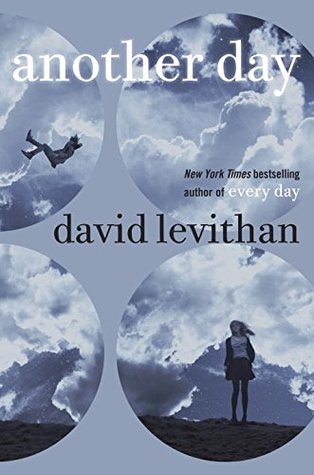
Another Day

by David Levithan

Reviewed by S.A.

I’m always one to jump for a David Levithan book when it comes up for grabs. However, I only realized after I had picked this one up that it was actually the companion piece (no, not sequel) to another one of his novels, Every Day, which I had not read… oops. But a very good friend of mine absolutely loved Every Day, and has been recommending it to me for ages; AND in the forward of Another Day, the author states he has newbies in mind too when writing his new novel; so I jumped in head first.

I thoroughly enjoyed it.

Summary – Curtesy of Goodreads

Every day is the same for Rhiannon. She has accepted her life, convinced herself that she deserves her distant, temperamental boyfriend, Justin, even established guidelines by which to live: Don’t be too needy. Avoid upsetting him. Never get your hopes up.

Until the morning everything changes. Justin seems to see her, to want to be with her for the first time, and they share a perfect day—a perfect day Justin doesn’t remember the next morning. Confused, depressed, and desperate for another day as great as that one, Rhiannon starts questioning everything. Then, one day, a stranger tells her that the Justin she spent that day with, the one who made her feel like a real person . . . wasn’t Justin at all. 

This is a fascinating concept: what if you had no body of your own? If every morning you woke up and were in someone else, but were still you? That’s the concept of Every Day, the novel this one is the companion of. How would you function? How would you build relationships? Could you build relationships?

Another Day is taken from Rhiannon’s perspective, as she slowly falls for A, a person with this particular predicament. Her life seemingly revolves around Justin, who, I admit, looks like a terrible person to have as a boyfriend. What’s interesting, however, is that this novel starts off on the day she meets A – so we think we are meeting Justin, without meeting him at all. Which makes his introduction an introduction through negatives: he never does this, he never does that. When we meet him in person, we see how he is the polar opposite of the person Rhiannon spends the day with, and it makes you feel the tension in their relationship even more.

It’s interesting how you can love a character while hating them as a person. Hate may be a strong word in this case, but I just did not like Rhiannon as a person, as a opposed to how much I enjoyed reading this novel and seeing her character grow. I find her too passive, too much of a pushover. It made me ache to see her in such an awful relationship, I wanted to grab her shoulder and shake her out of it. However, her growth within the span of two weeks is remarkable. It’s amazing how you can feel her isolation at the beginning, but slowly her friends are introduced – or re-introduced – into her life until she can finally breathe again.

It made me so mad how she acted around Justin, it kind of made me want to put the book down. Many things she did I really found myself annoyed at, especially once she started growing closer to A. There are just some things you don’t do when you’re in a committed relationship, no matter how much of a jerk the other one is – at least have the decency to tell the truth, to end it. There again is another reason I did not like her as a person, though admittedly it made for an interesting story.

Her inner monologue could be dull at times, and admittedly, the plot did not have much going for it. It’s very relationship oriented, and it really did feel like a companion piece: I was more interested in A’s life, what was happening in their life, than I was in Rhiannon’s. I could not understand what A found to like in her and wished I could follow A around for a while – this probably means I’m going to be picking Every Day up very soon.

However, some of Rhiannon’s thoughts were very compelling, especially when she was questioning what attraction means, or personhood, or the connection between body and soul. At those moments, I found the author to be very insightful.

All in all, it’s an enjoyable read. I’m going to read Every Day next, probably, and see if it makes me feel any differently after that.

Another Day comes out next week, on August 25th. Don’t miss it!

A Thousand Nights

by EK Johnston

Review by KM

I originally requested this book because I loved the summary and the cover was gorgeous. I truthfully had heard of One Thousand and One Nights before, but I didn’t know much about the original and I’ve never read it. Having wiki’d it now, I can see that this is clearly a retelling. I’m happy to have read A Thousand Nights, if only for the fact that it’s introduced me to the original, which I can’t wait to read.

Summary

Lo-Melkhiin killed three hundred girls before he came to her village, looking for a wife. When she sees the dust cloud on the horizon, she knows he has arrived. She knows he will want the loveliest girl: her sister. She vows she will not let her be next.

And so she is taken in her sister’s place, and she believes death will soon follow. Lo-Melkhiin’s court is a dangerous palace filled with pretty things: intricate statues with wretched eyes, exquisite threads to weave the most beautiful garments. She sees everything as if for the last time.But the first sun rises and sets, and she is not dead. Night after night, Lo-Melkhiin comes to her and listens to the stories she tells, and day after day she is awoken by the sunrise. Exploring the palace, she begins to unlock years of fear that have tormented and silenced a kingdom. Lo-Melkhiin was not always a cruel ruler. Something went wrong.

Far away, in their village, her sister is mourning. Through her pain, she calls upon the desert winds, conjuring a subtle unseen magic, and something besides death stirs the air.

Back at the palace, the words she speaks to Lo-Melkhiin every night are given a strange life of their own. Little things, at first: a dress from home, a vision of her sister. With each tale she spins, her power grows. Soon she dreams of bigger, more terrible magic: power enough to save a king, if she can put an end to the rule of a monster.

Musings

Now, if any of the aspects I love completely are derived from the original, pardon me. I’ve already said how I haven’t read it yet.

The main character in this story isn’t given a name. In fact, no one except Lo-Melkhiin is giving a name. They’re referred to by titles: Lo-Melkhiin’s mother, my sister, my sister’s mother, my mother, my father’s father’s father, and et cetera. Originally, I thought that this was clever. It reminded me of how stories would be passed down orally and become legends, to the point that the characters lose their names. Now, a week after reading it, I kind of feel like the lack of a name robbed her. She was to be a smallgod. If any character in the book should have been given a name, it should have been her.

She was strong as a character, taking her strength from how she protected her sister and from her inner magic. The magical parts had to be the best out of the entire book. By using traditionally feminine crafts, she was able to harness a power that not even Lo-Melkhiin could grasp.

A few other reviews have complained about the lack of romance between Lo-Melkhiin and the main character. I actually appreciated that it didn’t have that romance. The main character had nothing to go on except proclamations from Lo-Melkhiin’s mother that he was indeed, a good man. How is a person supposed to fall in love with that, especially when the horrible actions done were done by the same body? Had there been an instant romance, I wouldn’t have bought it.

Overall, I love to see an Asian story get a retelling; it stands out among all the Wizard of Oz and Cinderella ones on the bookshelves.