New Year Readsolutions

Happy new year, Readers! Here at Readcommendations, we’re excited to start 2015 with reading resolutions and challenges for ourselves… and for you, if you’re up for them!

Sarah’s Readsolutions

As with last year, and every year, I want to read a hundred books! Sometimes that’s more feasible than others, but it’s a good excuse to read and just keep reading. It also stops me from wasting my time on too much television… yet it’s terrible for someone with a knitting habit like mine. (Le sigh).

But I want to spice it up this year! I’ll be following Popsugar’s reading list, which I think will be a whole lot of fun. It’s incredibly complete, and I’m sure there will be books on there that I will put off for a long, long time… what a great excuse to grab something I wouldn’t usually read.

However, this inspired me to issue my own challenge, to all of you – Book Bingo, a challenge like the one issues by Popsugar, but it changes month to month, and it works just like a bingo card. I’ll be posting the rules on our readcommendations tumblr blog. Pick up your bingo card here, at Imgur. This one is just January’s, February’s will be different!

I will also be following a January book photography challenge. Please follow our Tumblr to learn more about this! We post mini reviews and photos multiple times per week, and it is there that we will issue the first book bingo challenge.

I just bought 15 new books using my christmas money – as soon as they get here (I’m in France, so it could be as late as next month) I’ll get cracking at reading and reviewing. I am so excited to get to reading them! I picked out a few autobiographies that I’ve been dying to read (Amy Poeler and Tina Fey, wut wut!) as well as a lot of YA, Sci Fi, and a few classics… I’ll post my haul on the tumblr when they get here.

Kenzie’s Readsolutions

I always swear to keep track of what books I’ve read each year, since I always vow to complete at least fifty-two. I was a lot better about this in 2013; I know I read a lot in 2014, but most of it never ended up being put into my tracker. For 2015, I still want to read at least a book each week, but I really want to pressure myself into using the tracker.

Along with that, I’ll also be attempting PopSugar’s reading list. Every time I post a review with a book that completes a task, I’ll be sure to point it out.

Finally, I really want to use my local library more. I currently have a stack of books that was due back last week — eek! — but it tends to be hard to find time when the library is open and I have access to the car. I’m going to make a better attempt to be on top of that and visit at least twice a month. No more outrageous bookstore purchases; I need that money to use on yarn. 😉

Thank you so much for following this blog as we take our first steps onto the internet. Please help use make 2015 the best book year ever! Happy New year!

Biggie

By Derek E. Sulivan
Reviewed by SA

Biggie“A teen story? A coming of age novel? Sports? Meh, we’ve seen those,” you say.  And so have I! I have read my fair share of high school books, and usually, I find myself quickly bored. To top that off, sports novels have never peaked my interest. Not so with Derek E. Sullivan’s “Biggie”, a novel that gripped my attention and held me until the very end.

Biggie is an overweight teenage boy, who has pushed himself to 300 pounds in an attempt to remain invisible at school. He spends his time studying, striving for perfect grades, while managing a slew of online friends. Biggie also happens to be the son of one of the biggest athletes of Iowa, and step-son to the close second. With a lineage like that, everyone expects Biggie to be some kind of big sports hero… that is, everyone except him.

When Biggie pitches a perfect game of whiffle ball during PE, the girl of his dreams suggests he should play ball… and he finds himself suddenly obsessed with the idea of pitching a perfect game of actual baseball, on the school’s actual team. Biggie finds himself challenged in every possible way on his quest, making radical changes to his lifestyle, changing his perception about himself, and everyone around him.

There are so many things about this novel that make it so compelling. For starters, Biggie, our protagonist and narrator, is smart, insightful, and imperfect. Many of the decisions he makes tend to be the worst possible ones, and though he feels justified in doing them, he is held accountable for his actions. And while his reasoning for wanting to keep his weight over the 300 pound mark seems justified to him, we as a reader are quick to see how unsound it really is. You might find it odd how quickly he throws his entire being into this insane idea of a perfect game, but we are completely aware of avery motivation behind it. Biggie may come off as a coward and a creep at first, but he slowly grows and evolves into someone I wouldn’t mind being friends with.

Biggie is a character with depth, but so are the people around him. The ‘bully’ turns out to be much more. The ‘girl’ turns out to be much less. Everyone else who is a part of Biggie’s life is more than just a placeholder or plot device. I loved the growth that they all went through, and how their own growth affected Biggie’s. The evolving relationship between Biggie and his step-father is something quite impressive, but it is really Biggie’s relationship with his peers, in particular with the women in his life, that is the most incredible change. The change in his obsession with Annabel is probably the best mile marker for his maturity.

With characters like those, it’s easy to root for them to reach their goals, even if those are *shiver* sports. As I said before, I don’t tend to find novels about sports compelling, but, to my surprise, I actually enjoyed reading about Biggie’s games. As baseball becomes increasingly important to him, it becomes important to us. Which is why I liked the resolution so much; I won’t spoil anything, though, you’ll have to read it yourself.

Biggie (Derek E. Sullivan) comes out on March 1st, 2015. 

Jellicoe Road

Jellicoe Road by Melina Marchetta (HarperTeen) 

Why, yes, this is the same book I’m holding in my biography picture.


Review by KM

As Christmas comes closer, many of us are struggling for last minute gifts. If you’re searching for a teenage book-lover, I cannot suggest Jellicoe Road enough. It’s been one of my favorites for half a decade now; I reread it every chance I get. Recently, I’ve heard rumors that it may be made into a movie next year, so best to catch it early since it may be the next big hit.

Summary

At age eleven, Taylor Markham was abandoned by her mother. At fourteen, she ran away from boarding school, only to be tracked down and brought back by a mysterious stranger. Now seventeen, Taylor’s the reluctant leader of her school’s underground community, whose annual territory war with the Townies and visiting Cadets has just begun. This year, though, the Cadets are led by Jonah Griggs, and Taylor can’t avoid his intense gaze for long. To make matters worse, Hannah, the one adult Taylor trusts, has disappeared. But if Taylor can piece together the clues Hannah left behind, the truth she uncovers might not just settle her past, but also change her future.*

Musings

As I said before, Jellicoe Road has been one of my absolute favorite books since I was a teenager. I will never be able to pick out just one part to be my favorite; the entire thing is just fantastic.

To start things off, it begins with one of the best hooks I’ve ever read: “My father took one hundred and thirty two minutes to die. I counted.” You can’t help but to read past that line. From there, it’s just getting better and more engaging until you end up with this giant book-hangover (here’s a tip: reading it again always helps a book-hangover. Hair of the dog and all that.)

Taylor, Raffy, Ben, Jonah, and everyone else makes up this giant crew of kids that you want to know and visit. Part of me wants to relate it to Harry Potter, where you have your houses and there’s this mostly-friendly competition between each other, but are all united by sharing this area and history.

My favorite part (okay, I’m saying it, but there are literally no-limits to my favorites in this novel) is Hannah’s book. Every few chapters, a bit of Hannah’s book is written in, showing her story from twenty two years ago. It’s intertwines perfectly with everything Taylor is going through, showing the history of all the characters at once. When it merges, it does so in a way that pulls everything together so satisfyingly.

Overall, if I could afford to buy this book and pass it out to strangers on the street, I would. I’d fill cafes and park benches with it. And then the movie would come out next year and I’d greedily gobble my popcorn as I watched it, only to go on a ten minute rant to my husband about it after it was done (which may have been the exact situation after last night’s Battle of Five Armies).


*Summary borrowed from Amazon.com

We Should Hang Out Sometime

By Josh Sundquist

Reviewed by SA

9780316251020_p0_v2_s260x420Next Tuesday, a fantastic new books hits the shelves: We Should Hang Out Sometime’ by Josh Sundquist, a brutally honest look at dating. It’s one of the Advance Reader Copies I was given at BookCon, and I admit that this review was published on my old blog (which no one needs to see.) But seeing as how the wait is finally over, I thought it best to share it with you all here.

The book itself is a memoir of the author’s experiences as a teenager/Young adult, chronicling his attempts (and failures) at finding a girlfriend. According to the author himself, it is a ‘semiscientific, wholly hilarious investigation’ into what went wrong in his pursuits of love. And by semiscientific, he means he forms hypotheses, investigates, tracks those women down, and asks them point blank why it never worked out between them.

I love the scientific approach to understanding where the relationships went wrong, as it ads to the charm of the book.
And there are charts. Very funny, very accurate charts, drawn in sharpie, placed here and there all throughout the novel, giving you insight into the author’s mind and a good laugh (or a sincere awww) in most cases.

The story itself is so brutally honest that I can’t help but feel connected to the life of young Josh, and the challenges he faces trying to find a girlfriend. It’s incredibly engaging. The reader finds themselves relating to his thoughts and feelings as he comes up against the challenges of finding love. The fear of rejection is a poignant reoccurring theme throughout the entire novel, which both holds him back from asking out the women he crushes on and taints his memory of the relationship, which we can se through the hypotheses he forms about why it never worked out between them. “She may have liked me, but…” is a repeated consideration of the author with almost each of the potentials. And it doesn’t help that he does get rejected right off the bat one of the only times he does go for it.

However, with almost every woman, the results of the investigation surprise Josh, and the reader – except in the few cases where the reader can see what young Josh couldn’t, and wants to scream at the page “She’s obviously into you! Go for it!”

The book is an incredibly quick read, both because the author manages to convey some of the key concepts through well thought out charts, and also because the reader just simply wants to know what’s coming next. I sat down and read the book in less three hours, on the bus on the way from BookCon to Philly. It reads like you’re sitting with a friend and he’s telling you his worst dating experiences. It’s engrossing, captivating, grabbing the reader and making them a participant in the investigation. It has some real laugh out loud moments, and I found myself laughing not only because of the absurdity of his predicament, but also because of how much I related to what he was feeling.

But the truth is, the book isn’t just about finding a girlfriend, findingtumblr_mbejmiwQ811qddjxro1_r1_400 love; it’s about our own insecurities, fears, our self esteem. It’s about you. It’s about all of us, because we can all relate to these, even if we aren’t missing a leg. This book isn’t just about finding love in others, but learning to love yourself.

Josh begins the book by stating that the reason behind his investigation, other than curiosity, is to find out what was wrong with him, if it was something like annoying habit, that he could change, or something permanent, that he would just have to live with. Each time, he asks what was wrong with him. And, SPOILER ALERT! Nothing is. The problem is that he believes there is.

Which is why I’d recommend this book to anyone and everyone who’s ever felt that deep set feeling that they’re just not good enough. Everyone can relate to Josh’s struggles. Everyone has felt insecure, for different reasons: maybe we didn’t even realize it at the time.

I really recommend this book. It’s a fantastically fun read that I’d happily share with others, and it offers a fantastic lesson – a truth – without being preachy. It’s one of those books that makes you wish you were friends with the author, so you could call them up and talk to them what you thought.

Random thoughts about the book:

  • Have any of you read An Abundance of Katherines (John Green)? Parts of the book felt a lot like that. Maybe it was the format of “This woman – this experience – This ending”. Maybe it was the theme of teenage love. Or coming of age. So if you like reading John Green, you’ll probably enjoy this novel.
  • After reading the book, I checked out Josh’s youtube channel and realized I recognized him from his “Doctor Who for Math Nerds” video. I watched a few vlogs and was shocked out how his voice is so recognizable from the book. it really is an honest novel, and he’s not trying to be anybody but himself.
  • I’m not a man or an amputee, but I really related to this book. Wowza.
  • We should hang out sometime! is quite accurately the best pickup line. Full disclosure, I’m probably going to use it in my future.

Originally posted on The Adventures of Gap Year Girl, June 2014.

Sarah’s 2014 Favorite – Station Eleven

by Emily St John Mandel
Reviewed by SA

I’m so late to this party. It’s the end of the year, and EVERYONE has done nothing but praise this new novel for the past few months. Best book of the year? Station Eleven sure is on a whole lot of people’s lists. And for good reason.

Post-Apocalypse novels seem almost overdone these days: somehow, civilization has fallen, the world as we know it is changed forever, and those who survive the initial cataclysm have a lot of adjustments to make. Picking up Station Eleven, Emily St John Mandel’s new novel, I was expecting more of the same; but I was pleasantly surprised.

So yes: civilization as we know it as ended. The Georgia flu, a viral pandemic of extraordinary proportions, kills off 99% of the planet’s population. We find ourselves twenty years later, following a troop of Shakespearian actors as they travel from settlement to settlement, working their magic on those of us who are left.

And it is beautiful.

StationelevenUKHCMany people have described Station Eleven as Mandel’s ‘Love letter to humanity’, and that is exactly the tone of the novel: civilization may have fallen, but we have gotten back on our feet, we still love and respect the good things, and we can adapt to new situations. The human race is adapting; newspapers are being written again, art is still being made, and people are still living. Even Shakespeare lives on.

The book divides itself between the world after the flu, following Kirsten, who was just a child when the world changed, as she performs and travels with the troop, and the days, months, and years before the pandemic, our present. The lives of the characters are intertwined around each other, sometimes in ways that seem far too coincidental to be believable, and the novel allows us to piece together the pieces as we go along.

Everyone seems somehow connected to Arthur Leander, a well know actor with a string of failed marriages. We follow his rise to fame; his many marriages; all the way to his final performance, which is actually where the book begins. We see Kirsten’s obsession with finding clues to Arthur’s life, and her attachment to the comic books, ‘Station Eleven’, whom no one seems to have ever heard of. We follow Jeevan, a paparazzi turned paramedic; Miranda, Arthur’s first wife, whose pet project seems to taint her relationships; Clark, Arthur’s older friend; and then there is this mysterious prophet, whom we don’t know too much about…

While the coincidences that connect the characters are sometimes too far fetched – I snorted aloud at more than one occasion – I thoroughly enjoyed how each of them were drawn out. These were characters with real dimension, that you began to care about and connect to, even if you were only with them for a short time.

There is just so much hope in this novel. It reflects a human race that deals with catastrophe with its chin up, and manages to make it through and survive through the most difficult trials. Some chapters begin by telling us the things that are gone, some making you close the book and pause to consider, but then they move on, showing that what remains is us, and we’re capable of so much more. The world has changed, but we’re still living, and we’re still acting.

Station Eleven is a fantastic read. The plot is captivating and enjoyable to follow, but the writing is what sells it. The beauty in the way Mandel describes the new world, and even in how she shows our current one. A book to be enjoyed and re-read over and over again.

One thing I found fantastic was the surprise page 305; if you purchased the ‘Picador’ edition, you will know what I mean.

Searching for Chintak

The Key to Chintak by John Howard

Reviewed by SA

The year was 2006. For my birthday, my parents bought me a handful of books, 51QbId1cWgL._SY344_BO1,204,203,200_and one of them was a signed copy of “The Key to Chintak.” This surprised me for a couple of reasons: one, I had never held a signed book before. I thought it was a fake. And two, because I had never heard of the author or series before.
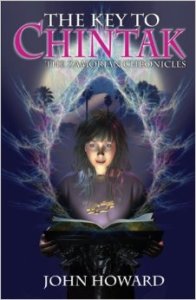
The odd thing is that neither of my parents can remember where they bought it. I had asked them at the time what it was like to meet the author, and they had surprisingly little to say. Now, neither of them even remember buying me any of the books that year.

This is how “The Key to Chintak,” by John Howard, came into my life. And it was about to change it.

The novel follows a young female protagonist, Millie, who discovers that only she can read a two thousand year book. She, and her grandfather, decide to follow the instructions laid on the seemingly bare pages, which leads them on an adventure across the entire planet, as they search for the key to Chintak.

I was hooked from the first page. Millie, our protagonist, is a twelve year old girl who is a stubborn as she is smart, able to think on her feet and hold her own in terrifying situations.  In a great first for me, this was a girl, in a science fiction novel! Up to that point in my life, every sci-fi novel I had ever read followed male heroes, and the women were always either the sidekick or the main goal/prize to be desired or won. I related with Millie, was drawn into her story; She was strong, smart, a hero in her own right. The story is clever and fast paced, set in places I could only dream of visiting. There are spaceships and aliens, gadgets and dodo (Yes, dodos!), underwater cities and secret passages in the world’s most famous monuments. And… superpowers. Really, really cool, super enviable superpowers. And it has tons of fascinating tidbits of history and geography that I remember sprouting to my family and friends at every possible occasion.

I read the book cover to cover, over and over again. I wrote my own (albeit terrible) fiction, pushed by waves of inspiration. It made me want to write, made me want to learn about science (and I’m now a physics student at university, on my way to becoming an astrophysicist) And I waited eagerly for the sequel to come out, checking the website every day, then every week, every month…

Once every year… every two…

Eventually, the book receded from my mind. I moved through the years with new books, growing from Artemis Fowl, to Percy Jackson, to The Hunger Games, to a shelf full of ‘classic’ science fiction and ‘serious’ science novels. But every once and a while, the memory of my long time favorite book swam back to me, and I would look it up online, wondering if the next novel was finally going to be released.

In 2010, I sent a message on his contact page on the book’s website. I never heard back from him, but I told myself it was because I probably misspelled my email address.

It is now 2014, and the urge is back. It’s just like that feeling you have to read Harry Potter again, or that you should re-read A Wrinkle In Time; the books that fueled your addiction to reading have a real impact on you, and you have to have a dose every once and a while. I got up this morning with a voice in my head practically shouting to pick it up again.

This time, however, I realized that I really wanted to know more. And this is where it gets kinda strange.

The Key to Chintak exists; it is well reviewed, even made it to the top of some bestsellers lists, but online… it’s a shadow. A ghost of a book. US Amazon sells only second hand copies; ebay sells a few first editions for well over $500; Though both amazon.co.uk and Waterstones still seems to sell the paperback. On Goodreads, the author’s page leads to the prime minister of Australia. There’s barely a review, except “I liked this, can’t wait for the next one” (you and me both, random reviewer).

So where is Chintak? What happened to this book that I loved so much? Why did it never make it big? It should have: the plot itself was (in my opinion as an 11 year old as well as now) at the same level as Harry Potter. So why is it no one has heard of it?

41-vQY+0TiLThe author’s webpage still stands; no information on the sequels, still marked as coming soon, and an empty spot for the film trailer, waiting to be filled. There had been no news since 2008; until a post dated 2013 where Howard to promises “to be back at [his] keyboard working on the next installment in the not too distant future” with apologies for the delay.

The webpage also hosts a pile of quotes from kids and teachers, thanking him for a fantastic book. I read through them and was surprised to see my own thought reflected in their thoughtful notes.

So I dove deeper.

Screen Shot 2014-12-02 at 7.00.25 PM

2006, and Howard is being interviewed by netribution. The article is old, and some of the pictures have gone the way of the 404. It tells a funny story about Howard’s previous misadventures with publishing, where, after a series of painful rejection letters from major publishing houses, he typed up the contents of his washing machine manual, called it “ The Tin Drum,” and sent it to the same publishers as he had before. When the rejection letters he received showed no change in their wording at all from the last ones, Howard decided to go for it, and publish himself.

Later in 2006, Howard writes an article for Tesco at Tesconnect about his self publishing adventure. Then there’s an article in The Telegraph, which starts by talking about Howard’s self publishing, but then moves away to talk about the future of buying books (and they’re pretty close).

In March 2007, Howard and his Key to Chintak were mentioned in ‘The bookseller’‘s “flagship feature”, in an article about big publishing houses trying to snatch up future bestsellers.

This explains a lot, for starters why I can’t seem to find much about him online, or find his books at Waterstones, even if it did make it in their top ten bestsellers. The article continues to say that he wasn’t picked up by bigger publishing houses because of the amount of work they said needed done, but that didn’t stop Howard from doing quite well on his own. And supposedly – again, supposedly – the royalties from self publishing are MUCH higher than he would have gotten with a publishing house.

10,000 copies; Howard promoted his book by going to schools and libraries across the UK, promoting through a series of readings (and it appears writing talks at schools?). It seems, from the sparse details I have seen online, that he was incredibly charismatic, and encouraged many of the students to read as well.

Also in March 2007, an article appeared on Me and My Big Mouth, which describes the author’s success. And it sums up the saddening failure as well: Chintak has the kick to be a bestseller, and yet… nobody wants it.

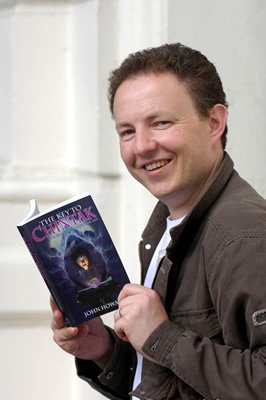
I finally found a picture of Howard, on… well, a mug you can purchase on Amazon. Or you could, but it’s out of stock. Possibly the oddest moment of my search.

But my question still stands: why didn’t this book become a hit? By all accounts, it should be. Sure, it can do for some editing (there is an abundance of out of place exclamation marks), maybe a flashier cover, but did that stop me from reading it? Nope. Big publishers did not know what they were missing. And, obviously, they still don’t, for some reason I can’t put my finger on.

You read about Rowling’s success, about her many rejections before Harry Potter became a household name and you wonder – how many other unsung gems never made it that far? I can list a few self published novels that are destined to become a hit (Pick up “The Grave Report” series by R.R. Virdi, for example) that I just want to tell the world about. There are some fantastic books that deserve notoriety.

And it hit me – I’m part of the problem. On the last page of the book, after the cliffhanger and the bold faced “THE END”, the author leaves you the website address. And then, right below, says, “Please, Please tell your friends about it.”

Self-published authors don’t have the resources of great publishing houses. They don’t have the marketing power and connections that get books to spread before they even leave the printing press. John Howard needed me, and the tons of other children who ADORED his book, to spread the word, to tell our friends, to let them know we had a fantastic novel in our hands that could quite possibly change their lives.

No book blogger catalogued its greatness. So here I am, doing it now, doing what I never did eight years ago: I’m telling you about this book.

The Key to Chintak is a fantastic novel. I loved it as a kid, and love it now. I am STILL waiting for the next one. No, time has not made me want it less; it has only made me anticipate its arrival even more. I sincerely recommend you pick up this book. It is the perfect novel for a pre-teen, fun, action packed, smart… Let’s give it the love it deserves!

Buy it. Share it. Spread it around. Let’s make it the success it should have been – and was on its way to becoming – nine years ago.

And John Howard, if you are reading this – thank you. Thank you for writing a book that pushed me into writing. Thank you for publishing, even through all the constraints.

And please, please let me know what happens next?

UPDATE: The author responded! Check out what John Howard has to say here.

Denton Little’s Deathdate

Denton Little’s Deathdate by Lance Rubin (April 14, 2015, Knopf Books for Young Readers)
Review by KM

I did it again, friends. I started a book for the beginning of a series when the sequels are no where close to be out. I always say I’m not going to do it anymore, that I’m going to wait until all the books are out. It never works.

I don’t know for sure that this is the beginning of a series, but I need more, so I am demanding a sequel. Maybe two or three.


Summary

Denton Little’s Deathdate takes place in a world exactly like our own except that everyone knows the day on which they will die. For Denton, that’s in just two days—the day of his senior prom.

Despite his early deathdate, Denton has always wanted to live a normal life, but his final days are filled with dramatic firsts. First hangover. First sex. First love triangle—as the first sex seems to have happened not with his adoring girlfriend, but with his best friend’s hostile sister. (Though he’s not totally sure—see, first hangover.) His anxiety builds when he discovers a strange purple rash making its way up his body. Is this what will kill him? And then a strange man shows up at his funeral, claiming to have known Denton’s long-deceased mother, and warning him to beware of suspicious government characters. . . . Suddenly Denton’s life is filled with mysterious questions and precious little time to find the answers.

Musings


I love the premise of this plot. Everyone knowing when they’d die? That’d be really cool! Or really anxiety-inducing, to be honest. I think I’d like to know when I’d die. It definitely forces you to embrace your morality and the alterations in the way death is mourned are intriguing.


The writing itself is funny and fast paced. There is so much action happening in each scene. I don’t like to gender books at all (Read what you will and definitely don’t condemn someone for what they’re reading!), but I have noticed that it’s much easier to get one of my guy friends to read a book that’s fast-paced than it is to get them to read a drawn out plot. I totally plan on buying this for my guy cousins in high school.


Denton makes douchey mistakes that would typically make me hate a character or avoid them if they were real. I’m not quite sure how, but his perspective made me think of them more as accidents — things he stumbled into without realizing he got there. I definitely wouldn’t call him innocent, but there’s this oddly endearing part of his character that makes me grant him more leeway.


I will warn some parents: there are more sexual references than I would have expected, probably enough to get it banned from some school libraries, but certainly the right amount to make it realistic. I never went a day in high school without a guy talking about their dick at the lunch table. If it was completely dry, I’d probably have connected less than I did.

All in all, I’m really looking forward to a sequel to this. It deserves one. I’ll let starting a new series before it’s finished slide — but only this time.

Snow Hunters

cvr9781476714813_9781476714813_hr.JPGby Paul Yoon
Review by SA

Have you ever stood in an art gallery, and been so entranced by a painting, time standing still as you stared into its depths, imagining the lives of the people depicted in the gorgeous landscape, wondering what brought them there, and how they knew each other? That is the sense you get when reading Snow Hunters, Paul Yoon’s second novel after the award winning Once the Shore. You are gazing into the depths of a painting as you read, time politely waiting for you to finish.

The book centers on a North Korean defector, Yohan, and his life as he makes a new home for himself in Brazil, after the war that tore his country – and his life – apart. As Yohan deals with the new culture and language, the trauma he suffered as a soldier in the war still clings tight to his mind, making it difficult for him to form bonds with the people he meets; yet each character who comes into his life will have a deep impact on his world. The few people who impact his life are very important to him; Kiyoshi, the tailor of little words, for whom Yohan works when he moves to Brazil, who helps him refine a trade and make a place for himself in this new world; Peixie, the groundskeeper at the local church, a loyal friend; and the children Santi and Bia, whom he watches growing up, and is strongly attached to. He must learn to let go of his past, so that he may forge new relationships with them.

The flashbacks to Yohan’s life before, during, and after the war, his life in the prison camps while trying to heal Peng, reflect the deep scars that still affect Yohan’s present. Time jostles back and forth, juxtaposing past and present, a reflection of just how present the trauma actually is. Many flashbacks occur suddenly, the present becoming past without a moment’s notice: Yohan is incapable of forgetting, his PTSD unspoken but present. This is the main theme of the short novel: moving on, healing, and change, and how necessary they are for growth.

It is a quiet novel: you get the sense that you are watching a long exposure of someone’s life, seeing the characters weave in and out of the fabric and leaving their marks. Yohan does not speak much, and is incredibly solitary, becoming more so when he defects, lost in the many foreign languages and culture shock. Though quiet, the novel is in no way slow; the action is fluid, moving from present to memory and back again, and in the capacity of the author to create such complete views into Yohan’s world brings life to even the smallest passage. Quiet is in no way a negative connotation when it comes to Snow Hunters.

This is a remarkable novel. While I am not the kind who usually enjoys historical fiction, there’s no denying that the beauty of Yoon’s writing won me over. Reading the book was a cathartic experience, a quiet testament to the slow healing of time. It is, in all way shapes and forms, a work of art. I highly recommend it.