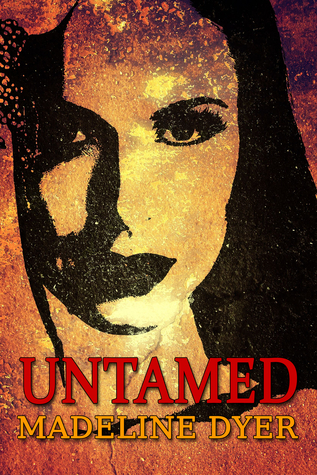
Untamed

by Madeline Dyer
Reviewed by SA

Sometimes a book comes along that catches you off guard. You finish reading it and just think: wow, wow… That book was fun, exciting, everything I wanted in a book. Can I get another? Well, Untamed was that book for me. It’s the perfect book to pull you out of a reading slump and remind you that a good plot can take you anywhere. And did I mention it’s exciting, and impossible to put down?

Summary25537679
As one of the last Untamed humans left in the world, Seven’s life has always been controlled by tight rules. Stay away from the Enhanced. Don’t question your leader. And, most importantly, never switch sides–because once you’re Enhanced there’s no going back. Even if you have become the perfect human being.

But after a disastrous raid on an Enhanced city, Seven soon finds herself in her enemy’s power. Realizing it’s only a matter of time before she too develops a taste for the chemical augmenters responsible for the erosion of humanity, Seven knows she must act quickly if she’s to escape and save her family from the same fate.

Yet, as one of the most powerful Seers that the Untamed and Enhanced have ever known, Seven quickly discovers that she alone holds the key to the survival of only one race. But things aren’t clear-cut anymore, and with Seven now questioning the very beliefs she was raised on, she knows she has an important choice to make. One that has two very different outcomes.

Seven must choose wisely whose side she joins, for the War of Humanity is underway, and Death never takes kindly to traitors.

The novel throws you right into the action, even from the first line. We follow Seven, a young woman who lives in this dark future where most of the population is addicted to mood enhancing drugs. The drugs, or Augmenters, can also make you more beautiful, stronger, faster, smarter… at the cost of your humanity. You feel no negative emotions, and your eyes glaze over with a mirror-like sheen. Those who are augmenter free live in constant fear of being converted, and are called Untamed.

After Seven is captured and then saved from the Enhanced, her life is constantly torn between the two camps. She’s addicted, to put it mildly. This makes her a fascinating character, as she tries to make the right decisions for her camp, while at the same time craving something she knows she mustn’t have.

The world that Dyer has created is just so dang fascinating. It’s a world in which not only we have these two opposing forces, but spirits are loose as well. Spirits that can influence Seven’s visions, or physically hinder the gang as they try to escape the clutches of the Enhanced. It’s pretty brilliant the way the author intertwines reality with these spirits, making you wonder just how they came into being and why they hold so much importance.

But I have to say what sol me on this novel was really the author’s effortless style. It’s perfect, making it easy to get sucked into the story and yet impossible to put down. I found myself eagerly turning the pages until I was outraged that there were none left to turn. The plot could easily have come off as being something seen before, but instead I felt like I was reading something entirely new, which plot twists I definitely did not see coming.

If you need a kick-butt story with amazing characters and outstanding world building, pick up a copy of Untamed. You deserve it.

Ink and Bone

by Rachel Caine
Reviewed by SA

I won a giveaway! I could not believe it when NovelReveries and BerkleyPub told me I won this awesome book I had been dying to read for ages. I mean, it had me at the premise alone: a world where the Library of Alexandria never burned down. What the world looks like, today, when the value of a book exceeds that of a person. And it sure did not disappoint.

Summary20643052

Ruthless and supremely powerful, the Great Library is now a presence in every major city, governing the flow of knowledge to the masses. Alchemy allows the Library to deliver the content of the greatest works of history instantly—but the personal ownership of books is expressly forbidden.

Jess Brightwell believes in the value of the Library, but the majority of his knowledge comes from illegal books obtained by his family, who are involved in the thriving black market. Jess has been sent to be his family’s spy, but his loyalties are tested in the final months of his training to enter the Library’s service.

When his friend inadvertently commits heresy by creating a device that could change the world, Jess discovers that those who control the Great Library believe that knowledge is more valuable than any human life—and soon both heretics and books will burn…

There is just so much going on in this book. Jess is a young book smuggler who joins the latest class of librarians in Alexandria in hopes of one day working for the great library… and of being in the right place when his father needs him.  He lives in a world where no one owns original books, only copies that exist through the codex – a bit like a kindle/internet thing – which exists through the work of Obscurists. The later are able to transfer contents of books from one place to another and keep the library running… but at what cost to real, physical books?

The author wastes no time explaining to us how the world is different: she shows us, right off the bat. There’s no long winded exposition, and the story flows naturally. I loved the fact that we slowly gleamed tidbits of how different history was as the novel goes on, without her saying anything explicitly. The world both feels foreign and yet completely likely… and relatable. Most of the countries we know exist, but England and Wales are at war, and Austria is no longer anywhere.

Jess himself is a great protagonist, as he’s still learning the truth about the library and his place within in. His perspective on things mimics ours: our disgust at the ink-lickers (My jaw was hanging in this very early scene) or oven his shock at the Burners are exactly how the audience would feel. But his views on the value of a book are a little convoluted, a little warped by the world he lives in. Are books really worth more than human lives?

Perfect world building in this novel. And you all know how much I love books about libraries! Plus, alternate histories? Completely my jam. Plus, no weird love triangles! What a fantastic read. Gosh, I loved it.

So I have to thank Berkley Publishing and Novel Reveries for organizing the giveaway and allowing me to read this fantastic book. I can’t wait for the sequel!

The Devourers

by Indra Das
Reviewed by SA

The second I read “werewolf” on the first page, I was ready to put this down. Thank god I kept on reading, because this is NOT a werewolf story: no, this novel is something much more. It’s incredible, unique, unforgettable in so many ways. If you’re a fan of indian folklore, and aren’t afraid of some pretty hard topics, then you’re going to need this book right away.

CW/TW: Sexual Assault, Rape. 

Summary27245999

For readers of Neil Gaiman, Margaret Atwood, China Mieville, and David Mitchell comes a striking debut novel by a storyteller of keen insight and captivating imagination.

On a cool evening in Kolkata, India, beneath a full moon, as the whirling rhythms of traveling musicians fill the night, college professor Alok encounters a mysterious stranger with a bizarre confession and an extraordinary story. Tantalized by the man’s unfinished tale, Alok will do anything to hear its completion. So Alok agrees, at the stranger’s behest, to transcribe a collection of battered notebooks, weathered parchments, and once-living skins.

From these documents spills the chronicle of a race of people at once more than human yet kin to beasts, ruled by instincts and desires blood-deep and ages-old. The tale features a rough wanderer in seventeenth-century Mughal India who finds himself irrevocably drawn to a defiant woman—and destined to be torn asunder by two clashing worlds. With every passing chapter of beauty and brutality, Alok’s interest in the stranger grows and evolves into something darker and more urgent.

Shifting dreamlike between present and past with intoxicating language, visceral action, compelling characters, and stark emotion, The Devourers offers a reading experience quite unlike any other novel.

It is the story of Alok, a lonely professor in India, who is approached by a stranger who wants him to type up an old manuscript. It’s the story of Fenrir, the story of Cyrah, the story of the stranger, and the story of Alok, all at once, each one flowing into the other effortlessly.

It was interesting to see the trope of werewolves in such a way. Only they’re not werewolves, they’re shape shifters, but it’s complicated. Their race has a culture, has a history, has rules and dogmas. And it’s so vastly complex it’ll make you rethink any story you’ve heard of them, ever. For it to be set in India only makes it more interesting.

What marked me most about this novel was really how it did deal with rape. Not once is it defined as anything but. The way the novel deals with monsters and man intertwines with this, and heck I don’t want to spoil it, but let’s just say this marked me and will probably be a passage I will never forget.

This novel is complex. Unique. It really is unlike anything else I’ve ever read. The last chapter left me shaking. If you’re looking for something incredible to read, well, you’ve got it.

Comes out today from Random House.

Foul is Fair

by Jeffrey Cook and Katherine Perkins
Reviewed by SA

This week we’re tackling an amazing fantasy novel for Self Published Saturday, a novel you’re sure to love: Foul is Fair, the first novel in the recently concluded Fair Folk Chronicles. It’s a brilliant book that takes you deep into the heart of Faerie, full of magic and danger… and dancing, too.

Summary25512566

Lots of girls play Fairy Princess when they’re little. Megan O’Reilly had no idea the real thing was like playing chess, guitar, and hockey all at once. Megan had known for a long time that she wasn’t an entirely typical girl. But living with ADHD—and her mother’s obsessions—was a very different thing from finding out she wasn’t entirely human. Somewhere out there, in a completely different world, her father needs help. There’s a conflict, revolving around Faerie seasonal rituals, that could have consequences for humanity—and if Megan’s getting the terminology straight, it sounds like her family aren’t even supposed to be the good guys. As she’s further and further swept up in trying to save her father, Megan may be getting too good at not being human.

When Megan discovers her dad – as well as her best friend – are mythical, she takes it all in one stride: she’s got a quest to follow! She has her father to save, let alone the whole world, the balance of which rests upon him being able to attend a dance that changes the seasons. She’s focused and determined, even without her medication, and she’s ready to take on this challenge if it means making things right for the world.

Megan is a skilled artist (thought she might be addicted to doodling) and begins to slowly see the power of music and signing. She’s got a knack for it, which some might call a little magic. I loved Megan as a character, and her friend Lani just as much. Their friendship is a powerful drive in Megan’s life and gives her strength and determination, as well as support as her world is turned on her head. And I’m such a sucker for female friendships in great novels.

My favorite characters, however, were not the main ones: no, I loved Cassia and Ashling a whole lot. Ashling might be my favorite pixie of all time: she’s sassy, funny, and crazy witty. Not to mention she’s technically living with a pixie disability, and her ‘service animal’ is a crow named Count who’s a personality all to himself. I’ve NEVER read a book like this before! Ashling’s comedic responses to Megan’s whole slew of questions – especially her variety of answers as to why Count is names Count  or where fairies come from – had me rolling on the floor laughing.

While some parts of the novel were exposition heavy, I found the overall creativity of the novel to make up for that. I loved the use of other myths from around the world that I had never heard of: Lani, for example, is part Menehune, which (I only just learned this) is a myth from Hawaii. This gives her a talent for engineering and creating things.

To recap all the amazing things about this book: great representation, love of art and music, love of science and creativity, the world of Faerie, myths from around the world, great adventure… and did I mention it’s a great read for any age?

“I’ve been a huge mythology nerd most of my life, so getting to play with the old myths, and have a series centered around the 4 treasures of Ireland, the 4 lost cities of the fae, and the 4 big seasonal events of the calendar was a lot of fun,” The author told me when I asked about his inspiration, “Thor #279 was one of the first things I ever really read, when I was 5. It sent me scrambling to learn the real myths. So I liked the idea of writing something where readers, especially teens, maybe could, or even would occasionally go running to google some of the things in the books, or read Celtic myth, Hawaiian myth, etc.”

And it worked! I ended up by starting to google “Menehune”and spend a few hours just browsing the interwebs, using this book as a guide. And I learned so much!

If you want a fun and creative take on the world of Faerie, then you’re going to love Foul is Fair. There are four books to this series, all available on amazon. The ebook for book 2 is on .99 sale on kindle through this weekend, as it is the summer solstice!

Like Self Pubbed Saturday? Use the hashtags #SelfPublishedSaturday and #IHeartIndieAuthors to spread the love!

Follow us on Instagram: https://www.instagram.com/readcommendations/
On Tumblr: http://readcommendations.tumblr.com/
And on twitter following @Readcommends

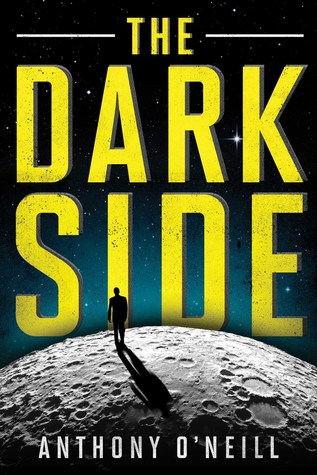
The Dark Side

By Anthony O’Neill
Reviewed by SA

Give me a fantastic Sci Fi any day, and I wont be able to move until I’ve finished reading it. With The Dark Side, I physically could not put it down, or else I would be stuck thinking about it every second until it was in my hands again. This book was gripping, thrilling, clever, and even funny, with such amazing science that I was completely engrossed from page one.

Summary27276286

In this dark and gripping sci-fi noir, an exiled police detective arrives at a lunar penal colony just as a psychotic android begins a murderous odyssey across the far side of the moon.

Purgatory is the lawless moon colony of eccentric billionaire, Fletcher Brass: a mecca for war criminals, murderers, sex fiends, and adventurous tourists. You can’t find better drugs, cheaper plastic surgery, or a more ominous travel advisory anywhere in the universe. But trouble is brewing in Brass’s black-market heaven. When an exiled cop arrives in this wild new frontier, he immediately finds himself investigating a string of ruthless assassinations in which Brass himself—and his equally ambitious daughter—are the chief suspects.

Meanwhile, two-thousand kilometers away, an amnesiac android, Leonardo Black, rampages across the lunar surface. Programmed with only the notorious “Brass Code”—a compendium of corporate laws that would make Ayn Rand blush—Black has only one goal in mind: to find Purgatory and conquer it.

The name Anthony O’Neill is going to soon become synonymous with impeccable world building. This author evokes a rich, complex world that follows the laws of science themselves. As a science geek, I absolutely loved how he infused the novel with the small details: like the large rain you would get in a humid hab on a rock where the gravity is so much lighter. Or the beautiful dust clouds created where the night meets day on the moon’s surface. Those beautiful, evocative details create a believable world you could almost imagine being in.

Not only that, but before each encounter with Leonardo Black, the Android walking the moon just to follow a set of programmed motivationals, the author details the life of the character who’s about to come into play. He shows us what it’s like back on earth, what it is to be a criminal in this near future. What line of thought can bring a person to live on the moon. The complexity of his background characters is astounding, and I honestly think he could write an entire book about each of them.

I myself could have read an entire book about Leonardo Black. This android was hilarious, even in his murderous rampage. His Brass code sounds like something out of the mouth of Donald Trump or Ann Rand. For example, he literally cannot spell surrender. He is motivated by a need to “Find Oz” and “become the wizard.” He’s a psycho, and yet he was my favorite character.

The main plot revolves around an Exiled cop, detective Justus, who’s trying to stop a wave of murders int he city of Purgatory. At first, I didn’t see how this storyline met  with that of Leonardo Black, but it all came together in the end in a really creative way. I loved how it felt like a noir detective novel from the 1950s, only set on the moon in a scientifically accurate future.

This book was pure FUN. I loved it. Think “The Martian” crossed over with a 1950s Noir novel. Fun for fans of thrillers and science fiction alike!

This novel comes out June 28th from Simon & Schuster.

Moxyland

by Lauren Beukes
Reviewed by SA

Prepare yourselves for an insane thrill ride, not for the feint of heart. This novel is everything a science fiction novel should be an more, and you’re going to fall in love with Beukes’s writing. And you’ll probably come out hating humans, but we all need a good dose of that from time to time.

Summarycover90409-medium

A frighteningly persuasive, high-tech fable, this novel follows the lives of four narrators living in an alternative futuristic Cape Town, South Africa. Kendra, an art-school dropout, brands herself for a nanotech marketing program; Lerato, an ambitious AIDS baby, plots to defect from her corporate employers; Tendeka, a hot-headed activist, is becoming increasingly rabid; and Toby, a roguish blogger, discovers that the video games he plays for cash are much more than they seem. On a collision course that will rewire their lives, this story crackles with bold and infectious ideas, connecting a ruthless corporate-apartheid government with video games, biotech attack dogs, slippery online identities, a township soccer school, shocking cell phones, addictive branding, and genetically modified art. Taking hedonistic trends in society to their ultimate conclusions, this tale paints anything but a forecasted utopia, satirically undermining the reified idea of progress as society’s white knight.

Moxyland is very character driven. All four characters live in South Africa, and their lives all intersect and their paths cross in interesting ways. And each of them are just so incredibly relatable: they’re all a little hot-headed, maybe entitled, self absorbed, and cynical about the world they live in. Whether they like it or not, they all have an important role to play.

We have Kendra, the artist, who’s trying to be independent: she joins a nanotech research program/marketing scheme, which will change her life forever. There’s Lerato, who’s trying to climb the corporate ladder while still hating the corporations. Ten, a activist who slowly begins to cross the line into terrorism, and Toby, a gamer and blogger who just wants to live his comfortable lifestyle. They all have different views of the world they live in, many too comfortable to do anything to change it, while others may try and do too much. it can all end in tears.

The future that Burkes imagines for South Africa is a very plausible one. Everyone is very dependent on their smart phone, as it carries their identity, their bank account, and will even be used in riot control or police arrests. Losing your phone is being tossed out of society. This, and other cool technologies I won’t spoil for you, made so much sense for the world of tomorrow.

The plot itself is a little complicated to get into at first, to see how everyone fits together, but it grows until a climax that is absolutely heart stopping. Seriously, I could not put this book down. It was so exciting, and terrifying… but no, no spoilers!

The novel is also a bit of a social commentary on us (well, a lot of a social commentary), about the power of consumerism and corporations, about complacency, about giving up our freedoms for perceived comfort. It’s not exactly eye opening, but still an amazing study. It kind of makes you hate us current humans.

For fans of Snow Crash, and cyberpunk, who love classics like Brave New World. This book will leave you breathless.

A new paperback edition comes out 16 Aug 2016 from Mulholland Books.


The Crown’s Game

By Evelyn Skye
Reviewed by SA

I have been excited for this book for ages: I mean, magic in imperial Russia? Yes please! And I was so thrilled that it did not disappoint. I couldn’t put it down: quite literally, actually, as I sat down and read it in about two hours, and didn’t see time go by.

Summary26156203

Vika Andreyeva can summon the snow and turn ash into gold. Nikolai Karimov can see through walls and conjure bridges out of thin air. They are enchanters—the only two in Russia—and with the Ottoman Empire and the Kazakhs threatening, the Tsar needs a powerful enchanter by his side.

And so he initiates the Crown’s Game, an ancient duel of magical skill—the greatest test an enchanter will ever know. The victor becomes the Imperial Enchanter and the Tsar’s most respected adviser. The defeated is sentenced to death.

Raised on tiny Ovchinin Island her whole life, Vika is eager for the chance to show off her talent in the grand capital of Saint Petersburg. But can she kill another enchanter—even when his magic calls to her like nothing else ever has?

For Nikolai, an orphan, the Crown’s Game is the chance of a lifetime. But his deadly opponent is a force to be reckoned with—beautiful, whip smart, imaginative—and he can’t stop thinking about her.

And when Pasha, Nikolai’s best friend and heir to the throne, also starts to fall for the mysterious enchantress, Nikolai must defeat the girl they both love… or be killed himself.

As long-buried secrets emerge, threatening the future of the empire, it becomes dangerously clear… the Crown’s Game is not one to lose.

I loved the world the author created, melding a well researched imperial Russia with the promise of magic and enchantment. The descriptions of not only St Petersburg, but also the Steppe, and the islands truly made you feel transported there. I could almost feel everything around me as I was reading, which is what made it so difficult for me to pull away.

The magic itself is something beautiful. Evanescing, the enchanted way to travel, is something described in such a gorgeous way that I wished I could travel like that, too. However, I was disappointed when I realized there would not be strong magical battles (Like in A Gathering of Shadows) but that was quickly remedied when I was sucked into the beautiful creations of our two heroes. At each turn of the game, they compete to outshine each other, and the result is quite beautiful.

As for the characters themselves, well, some I loved, some I hated, and some I loved and hated through the novel.  I did relate to Vika and Nicolai, and quite enjoyed their difference in magic (one being more elemental, the other more technical) and how they complemented each other. Vika’s fiery and fierce, headstrong and independent. Nicolai was more book loving, a bit Nerdy, but a bit of an artist. While some of their decisions seemed illogical, I’ll put that down to them just being young. I make irrational decisions too.

While Pasha seemed fantastic to me, his family seemed quite two dimensional. Actually, most minor characters seemed to suffer this lack of depth, some of whom can be written up into just one word. The secondary villain (if you can call her that) actually built up great, but then just kind of fell flat and stopped being the threat we expected her to be. She fizzled.

But boy, did I like this world. I loved how the magic worked, I loved the enchanted mountain, the idea of volcanic nymphs, the beautiful descriptions. I would highly recommend this book to lovers of historical fiction, actually.

I think you’ll like it too!

IMG_6294


The Heart Goes Last

by Margaret Atwood

Reviewed by SA

When I saw that this book was available, I jumped at it. Margaret Atwood? Heck yes! I was super excited to get to reading, and had no idea what to expect. And now, after having finished the novel, I still have no idea how to describe this book. It was pretty amazing, while being strange, unpredictable, and oh so weird. The premise itself is bizarre to begin with, and it just goes on from there.

Summary

(from the book, since I honestly have no idea how to summarize this novel without giving anything away.)

Stan and Charmaine are a married couple trying to stay afloat in the midst of an economic and social collapse. Job loss has forced them to live in their car, leaving them vulnerable to roving gangs. They desperately need to turn their situation around—and fast. The Positron Project in the town of Consilience seems to be the answer to their prayers. No one is unemployed and everyone gets a comfortable, clean house to live in . . . for six months out of the year. On alternating months, residents of Consilience must leave their homes and function as inmates in the Positron prison system. Once their month of service in the prison is completed, they can return to their “civilian” homes.
At first, this doesn’t seem like too much of a sacrifice to make in order to have a roof over one’s head and food to eat. But when Charmaine becomes romantically involved with the man who lives in their house during the months when she and Stan are in the prison, a series of troubling events unfolds, putting Stan’s life in danger. With each passing day, Positron looks less like a prayer answered and more like a chilling prophecy fulfilled.

From some online research, I’ve gathered that this novel is a reworking of Atwood’s epub series, “I’m Starved for You” , Part of the Positron series. Having not read this series myself, I can’t really comment on how it’s been altered: the changes the author has made, the things she has added or taken away, I don’t know. However, I do know that fans of the series must be pretty excited about this new release.

Set in a dystopian near-future, The Heart Goes Last  touches on the idea of obsession, power, and love. If this makes you uncomfortable, then I’m sorry to say this novel will have your skin crawling. There are characters inside so overcome with desire for others that they completely let go of rationality and step into the realm of science fiction. We have Stan’s obsession with Jasmine, the woman he believes is his alternate, and who appears to be the answer to his sexual fantasies. There’s Ed, and his obsession with Charmaine, going far beyond what is healthy. And then there’s the secret of Positron itself, and what it has to offer the outside world: a cash cow of Possibilibots (incredibly lifelike sexbots) and an operation that could give any person with the right price exactly what they’ve always wanted…

Atwood manages to make you cringe so many times in this novel. While the main plot is strange, in a very bizarre world, full of the oddest twists and surprises, it somehow comes off as comedic, with the ending like something out of Midsummer Night’s Dream. However, it is still incredibly dark. These things cannot be legal, and at many points creeped me out. Stalking, spying, lifelike sexbots – the lengths some people will go to get what, or who, they want, astounds me.

It’s odd how much I liked this book without liking many of the characters. Stan came off first as a bit of a creeper, but his character seemed kind of empty towards the end, which is understandable considering what he’s been through. Charmaine seemed at times resourceful and smart, but other times came off as a bit of an airhead. While I loved the plot of the novel, sometimes the wandering thoughts of our two protagonists slowed down the pace too much for me. I found that their idea repeated themselves a lot without much development, to the point where it made the novel feel slightly dull. It really picks up once Stan is told the truth and thrown out of the status quo.

The novel accelerates towards the end, or at least, increases in weirdness until the ending. The end itself seems still a little strange for me: as I said before, it reminds me a lot of “A Midsummer Night’s Dream” in the way that everything comes together and love is set right – even if in some cases that love may be a little strange. But here I am, sitting and thinking about this novel and its bizarre ending, long after the book has been put down. It’s stuck with me.

I do really recommend this book, though. It’s a dark comedy very much in synch with what Atwood has written before. It’s strange, yes, but also thought provoking and memorable. Publishing date is expected to be September 29th.

The Miracle Girl

By Andrew Roe

Reviewed by SA

Sometimes we all need a book like this in our lives. The Miracle Girl is a book about hope, hope in the worst of situations, and it is sweet and powerful and gorgeous all at once. Yet it stands out far above the rest in the blatantly honest view it has of the world: fair warning, this is no chicken soup for the soul.

Summary – from Goodreads

The crowds keep coming. More and more every day it seems . . . drawn by rumor and whisper and desperate wish. Somehow they heard about the little girl on Shaker Street.” They come to see eight-year-old Anabelle Vincent, who lies in a comalike state–unable to move or speak. They come because a visitor experienced what seemed like a miracle and believed it was because of Anabelle. Word spread. There were more visitors. More miracles. But is there a connection? And does it matter?

Set against the backdrop of the approaching millennium–with all its buzz about reckoning and doom–this impressive debut novel is narrated by Anabelle herself; by her devoted mother, who cares for her child while struggling to make sense of the media frenzy surrounding her; by Anabelle’s estranged father, who is dealing with the guilt of his actions; and by the people who come seeking the child’s help, her guidance, and her healing. Yet it tells a larger cultural story about the human yearning for the miraculous to be true, about how becoming a believer–in something, anything, even if you don’t understand it–can sustain you.  

After a serious car accident, Anabelle is in a coma – not exactly a coma, her mother will explain, something very much like a coma, and very complicated – and yet, somehow, she now seems to be the center of miracles. People pray by her, maybe even to her, and they are healed. As word of this ‘Miracle Girl’ spreads, her mother’s life is turned upside down once again, as hundreds of people begin the pilgrimage to see the child. But not everyone believes in her…

You may be saying: “Aw heck, is this a religious book?”, to which I would reply “no, but it is a book about belief.” It’s one of those novels that captures what it is to be human: the way we search for answers and guidance in times of great need. Anabelle’s mother is scrambling for something to believe in; many chose to believe in Annabelle; others chose to believe in God; even more search for rational explanations. But the truth is, everyone just wants something. Maybe the miracle is finding just that.

The novel is not a strictly linear progression through time. The author uses interesting flash backs, as well varieties of points of views, while changing the tone and fluidity of the story to expertly convey emotion. While most of the novel is slow going (not in a bad way, trust me) the focus on character and on human nature is fascinating, to the point where is may even be considered a critique of America itself, so eager to throw their faith at whatever seems to be giving them results… placing this story at the turn of the millennium adds to the point I think the author is trying to make, and I found it quite impressive.

For a novel that will calmly and expertly make you hope again, pick up The Miracle Girl.

Biggie

By Derek E. Sulivan
Reviewed by SA

Biggie“A teen story? A coming of age novel? Sports? Meh, we’ve seen those,” you say.  And so have I! I have read my fair share of high school books, and usually, I find myself quickly bored. To top that off, sports novels have never peaked my interest. Not so with Derek E. Sullivan’s “Biggie”, a novel that gripped my attention and held me until the very end.

Biggie is an overweight teenage boy, who has pushed himself to 300 pounds in an attempt to remain invisible at school. He spends his time studying, striving for perfect grades, while managing a slew of online friends. Biggie also happens to be the son of one of the biggest athletes of Iowa, and step-son to the close second. With a lineage like that, everyone expects Biggie to be some kind of big sports hero… that is, everyone except him.

When Biggie pitches a perfect game of whiffle ball during PE, the girl of his dreams suggests he should play ball… and he finds himself suddenly obsessed with the idea of pitching a perfect game of actual baseball, on the school’s actual team. Biggie finds himself challenged in every possible way on his quest, making radical changes to his lifestyle, changing his perception about himself, and everyone around him.

There are so many things about this novel that make it so compelling. For starters, Biggie, our protagonist and narrator, is smart, insightful, and imperfect. Many of the decisions he makes tend to be the worst possible ones, and though he feels justified in doing them, he is held accountable for his actions. And while his reasoning for wanting to keep his weight over the 300 pound mark seems justified to him, we as a reader are quick to see how unsound it really is. You might find it odd how quickly he throws his entire being into this insane idea of a perfect game, but we are completely aware of avery motivation behind it. Biggie may come off as a coward and a creep at first, but he slowly grows and evolves into someone I wouldn’t mind being friends with.

Biggie is a character with depth, but so are the people around him. The ‘bully’ turns out to be much more. The ‘girl’ turns out to be much less. Everyone else who is a part of Biggie’s life is more than just a placeholder or plot device. I loved the growth that they all went through, and how their own growth affected Biggie’s. The evolving relationship between Biggie and his step-father is something quite impressive, but it is really Biggie’s relationship with his peers, in particular with the women in his life, that is the most incredible change. The change in his obsession with Annabel is probably the best mile marker for his maturity.

With characters like those, it’s easy to root for them to reach their goals, even if those are *shiver* sports. As I said before, I don’t tend to find novels about sports compelling, but, to my surprise, I actually enjoyed reading about Biggie’s games. As baseball becomes increasingly important to him, it becomes important to us. Which is why I liked the resolution so much; I won’t spoil anything, though, you’ll have to read it yourself.

Biggie (Derek E. Sullivan) comes out on March 1st, 2015.