Dissolution

by Lee S. Hawke
Reviewed by SA

Ah, Self Published Saturday! The day we here at Readcommendations celebrate amazing self published books that deserve a place on your bookshelf. And I have read a lot of self pubbed books this month, let me tell you! Yet none of them stood out to me as much as Dissolution, a brilliant (YA) science fiction novel which will have your mind in knots for days.

Summary29603794

What would you sell yourself for?

Madeline knows. She’s spent the last eighteen years impatiently waiting for her Auctioning so she can sell herself to MERCE Solutions Limited for a hundred thousand credits. But when the Auctioneer fails to call her and two suits show up at her doorstep, Madeline discovers there are far worse bargains to be made.

So when your loved ones are in danger, there’s a bounty on your head and your entire city might turn out to be a lie… what would you sell yourself for?

The future Madeline lives in isn’t a bright one. Toxic rivers, arid deserts: the world beyond the wall is beyond hope of saving. But her city, Unilox, seems to be a beacon of life and hope, minus the freedom. You see, the city is run entirely by corporations, and being a citizen means being a part of one of them. Not just as an employee… but as a purchased product what belongs to them. At 18, gaining citizenship means being auctioned off, and having your contract purchased by any one of these corporations. Your life belongs to them, and they decide your value.

But it’s a system that works. Everyone gets along swimmingly in this future: there are incredibly high tech body augmentations available to everyone, which allow you to have bionic eyes, or to have  tastes fed to your brain which make the nutrient mush you eat taste like anything you want. People are healthy, and happy. The problem is that they all wear collars.

Madeline belongs to ANRON, the medical corporation. They run tests on everything, and her own parents have payed the cost with their own health, being experimental themselves. Madeline wants to be purchased by MERCE, the tech industry, but when she isn’t even called up at the auction, her hopes of reaching her dreams are shattered. When she learns that ANRON never intended to give up her license, and they would rather have her on a metal slab to slice her open, she must make a daring escape to fight for her freedom in a world where only a handful are truly free.

Hawke creates an amazing world for us to fall into. The world of people as products and human auctions almost feels real, and somehow completely believable. From the first page we’re pulled into Unilox, and we’re rooting for Madeline as she nervously prepares to be sold at auction. Yup, we’re excited for her.

At first glance, you might think this looks like the ‘usual’ YA, but I’m here to tell you that it’s much much more. For one, you don’t have a silly love triangle getting in the way of the plot. Madeline’s relationship with Jake is something that both drives her and motivates her, and it’s healthy and heartbreaking. Honestly it was refreshing to read! Even though it broke me in the end…

The plot is also intensely gripping. Madeline’s only goal is to survive, and this leads her to discover the true workings of her city, and realize that it’s not right. We can’t help but cheer for her when she realizes what we’ve known from the start: that people are not products, and that companies may have the same rights as a human being, but they are only as strong as the people who make them up. But this makes the read even more enjoyable: a clear goal, a world bent on catching her, Madeline’s plight is something we can latch on to.

As a matter of fact, I would only call this YA because of the age of the protagonist (18). It is so much better than those ‘trendy’ books out there! The plot is rich and exciting. The protagonist is relatable and you want to root for her.  And the ending absolutely destroyed me, making me feel like I’ve been ripped apart. It is such a brilliant way to shut the book. And now I’m stuck here, with feels.

Trust me on this:  you won’t read another book like Dissolution. Pick it up on amazon STAT!

Kindle: http://www.amazon.com/dp/B01DEGTLGK
iTunes: https://itunes.apple.com/au/book/dissolution/id1096943300?mt=11

Weightless

by Sarah Bannan

Reviewed by SA

High school drama can seem pretty funny from the outside, but truthfully, for some it’s life or death.  With the technology we have today, it’s becoming way too easy to bully someone without consequence; it’s becoming easy to get distracted and not notice the warning signs of someone that needs help. For anyone who recognizes these problems, and for those who haven’t any clue what I’m talking about, this novel is mandatory reading.

Summary (taken from goodreads)

When 15-year-old Carolyn moves from New Jersey to Alabama with her mother, she rattles the status quo of the junior class at Adams High School. A good student and natural athlete, she’s immediately welcomed by the school’s cliques. She’s even nominated to the homecoming court and begins dating a senior, Shane, whose on again/off again girlfriend Brooke becomes Carolyn’s bitter romantic rival. When a video of Carolyn and Shane making out is sent to everyone, Carolyn goes from golden girl to slut, as Brooke and her best friend Gemma try to restore their popularity. Gossip and bullying hound Carolyn, who becomes increasingly private and isolated. When Shane and Brooke—now back together—confront Carolyn in the student parking lot, injuring her, it’s the last attack she can take.

The thing that caught me right away about this novel was the narrative form. The perspective is from a first person plural – we – and it catches you off guard. I know when I started to read Weightless I was waiting to know the name of the person who was recounting all this, only to find that it actually represented everyone. The perspective of the novel is an eye opener: everyone can see what’s happening and completely ignore the warning signs. It’s a little scary, honestly.

The issues that are brought up make me sad, because I know so many people caught in similar situations. Eating disorders, the fear of becoming fat when in fact you are fading away. Cyber bullying, out for everyone to see and no one can, or will help. Physical bullying, where everyone turns a blind eye. Depression, and suicide, when people say they never saw it coming, when in fact they were part of the problem. Weightless deals with the issues teenagers face in a high school environment, and it is not sugar coating any of it.

The novel chronicles the rise and fall of Carolyn, a young fifteen year old girl, remarkably smart, who moves to this new, small town. Everyone in Adamsville has known each other for years: they all attend church together, pray over the sports team together, gossip and grow together. And no matter how much they like her, Carolyn will always be an outsider: she’s too pretty, too nice, too smart. She doesn’t know how to deal with the small town popularity contest, doesn’t even want to play. This is what makes the first person plural narrative so powerful: the “We” is always sharing gossip, telling itself things about this girl. We is turned into this creature, a monster that thrives on partial truths and full on lies, warping its perspective of this normal person until she has become some kind of non-entity. Who even is Carolyn?

The pacing was slow, thoughtful. It takes place over an entire school year, so that the transition between loved and popular to hated and outsider is slow, natural. I loved how the author used Facebook posts and letters, even Carolyn’s essays, to show us how her character was evolving. It felt incredibly realistic. The hints about her fate, slowly dropping through the novel, created fantastic anticipation and made me crave to read more.

The ending, however, did not. I felt as if the reaction of the community (even the world) was blown out of proportion, it’s what we would have wanted to see happen rather than an actual, realistic consequence. I do not want to spoil anything for anyone! But I did find it was odd, more like wish fulfillment for the reader.

In any case, this is a tough novel to read because the subject matter is so important and heavy. Even so, it’s a fantastic book.

Find Weightless on June 30th.

N.B. (A micro rant about the American school system) I don’t get American high schools, you know? So much bitching! Not only that, but is “Protagonist” really a word too complicated for a Junior in Advanced english? I learned it in sixth or seventh grade! Come on! And do you really have to be in an higher math class in 11th grade to learn what a cosine is? I was taught trig in ninth grade, I just don’t get why it takes so long here.

But the bitching, the bitching! One thing that almost made me put down the book was how bitchy everyone was to each other. Encouraging eating disorders in order to slim down! (That scene in the bathroom physically hurt me). Calling people sluts and spreading rumors about STDs? What is wrong with this picture?

That’s probably why this book was so on point. For me, it was provocative. It opens the discussion on the issues on the forces social structure within the confines of the public school environment. And there’s a whole lot to talk about.

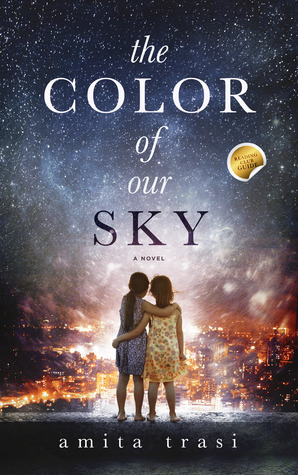
The Color of our Sky

by Amita Trasi 

Reviewed by SA

Fair warning: this book is a difficult read. The subject matter is heavy and painful, so there are content warnings for rape, abuse, and violence, to say the least. It will also frequently bring you to tears. Yet the story is one of love and determination, spanning years and breaking your heart. I absolutely loved it.

Synopsis

Tara has returned to India, to her old apartment in Bombay, the scene of the kidnapping of her friend Mukta eleven years previously. Mukta was a village girl, daughter of a prostitute and fated to become one herself, who was brought in to their household by Tara’s father when she was no older than ten. The girls grew up together, spending five years blossoming their friendship, before the fateful night when Mukta was abducted. Now Tara is determined to find her, and will do so at any cost. The novel spans thirty years, taking you to the past, the present, and pushing into the future as Tara digs up clues to her friend’s fate… as well as secrets surrounding her own family.

First and foremost I loved the lyrical nature of this novel. Trasi has an incredible style, and manages to bring to life the most gorgeous images of India – as well as the, well, not so gorgeous. She weaves local terms into her text, which at first I found a little confusing, as there was not always enough context to grasp their meaning, until I found the lexicon in the back. She truly brought India to life, for better of for worse.

The bond between Tara and Mukta was one of the factors that kept me reading this book so intently, even through the incredibly terrifying moments. The character development through the course of the plot was grounded and human, which made the two of them gain dimension and depth. The other characters in their lives sometimes lacked the spark that brought them out of the page, but with the two young women front and center, the focus is where it should be.

The horror in the novel is a serious wake up call. The brutality of human trafficking is alive in India, and the torment Mukta is living through would be something I wished could not be real. The author describes in vivid detail the living conditions of these women, the horror of what they have to go through every day, and the definite knowledge that there is no way out. These were the most difficult parts of the novel to read, and it’s enough to bring us to tears.

There were definitely a few things I found weird. For example, Tara’s cash flow. We’re told she has been working three jobs back in America, yet she finds a somewhat endless supply of cash for bribes in India. She also somehow affords to take months out of work to try and find Mukta and doesn’t seem to be working in India either. Maybe this is just a detail, but it took away from the realism that was otherwise so convincing.

Another little weird thing was the quotes. Between chapter, you would get a quote from either Tara or Mukta (sometimes to signify a change of perspective or point of view) which just felt a little out of place. The form of the novel does not call for it: the book is not an interview, a journal, or letters. What are the quotes doing there? They really felt out of place.

Read this book at your own peril: you will find love and friendship, but also pain and suffering. You will read true horror but also true hope. The Color of Our Sky is expected to be published on June 30th.

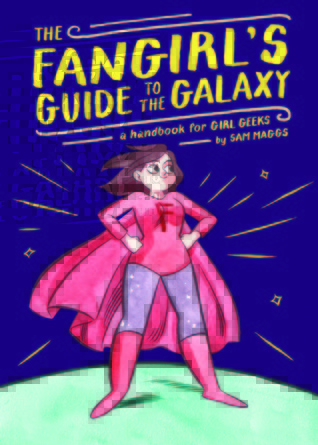
The Fangirl’s Guide to the Galaxy

A Handbook for Girl Geeks

By Sam Maggs

Reviewed by SA

This is the guide you’re looking for.
Believe me when I say: you need this book in your life. It is the most complete guide to fan-geekery I have ever read, and I finished it feeling proud of my quirks and fandoms. It was complete and gorgeous, and I think it may need the tagline ‘A reference for the rest of us‘ on the outside, because I am certain that everyone, not just the fangirl, would benefit from reading this book.

So what is this guide? What does it guide you to? What’s in it that makes it so special? Well, first of all, let me address the fangirl who’s wondering why she even needs a guide to the galaxy. For starters, you probably don’t need guide, because let’s face it, you’re awesome, and you’ve made it this far, right? But this guide is special. Because for once, it’s a guide with you on its mind. You’re the one it’s written for! That was a big first for me: it’s rare to get good books for the female geek. It’s tailored to your needs. Which is pretty dang cool.

That alone doesn’t mean you need this book, so just listen to what the guide actually contains. It’s basically an encyclopedia of geek terms, an overview of major fandoms, fabulous advice for everything from dealing with Trolls to having the best time ever at Con, interviews with kick–s successful ladies that we love, and resources for finding great places on the internet.

The interviews were a great touch: the women interviews are writers, artists, geeks who have really put their names out there, and their input is fantastic. It’s a reminder as to why being a fangirl is something to cherish. Many of these women are already personal inspirations to me, pushing me to follow my dreams (as cheesy as that sounds) and reading their thoughtful words just makes me love them more. You go, girls!
a lot of feelings

However, I feel like while this book is aimed towards us fangirls, it’s a great resource for the people around us. I think my mother might gain a better understanding into how I spend my time if she were to read it. My father might understand what I’m talking about when I start using ‘internet vernacular’. My non-geek family could gain a better respect for the culture of my community.

Yes, a lot of the terminology defined is something a fangirl would have picked up even on her first day on the internet. But that’s why I feel like it’s slipped in for the benefit of the others, as a way to invite out family and friends into the fold. And what a great way to do that! It gives us a starting point to build off when we want to share our love of all things fandom with our actual loved ones.

The greatest thing that comes from this book, however, I think is the empowerment. The validation. The guide reminds us that we should be proud of what we chose to love, that we will not be held down because of it. It is inclusive of everyone (not just fangirls) and supportive of all interests. It offers resources against online bullying and anything that can be thrown at you out IRL.

This is why the Guide is not simply a guide. It’s got a bit of something for everyone, and everyone will love it. Expect it on May 12.

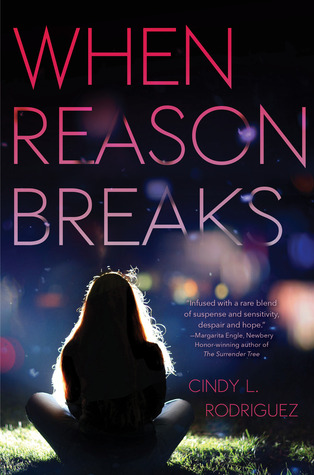
When Reason Breaks

by Cindy L. Rodriguez

Reviewed by SA

I am always nervous when I pick up YA novels (I say pretty much the same thing every time I start a review of a YA), as it is so hard to find a book that defies formula, breaks into new territory, and rips your heart out. Guess what? When Reason Breaks (Cindy L. Rodriguez) is most definitely a great novel. Plus, it’s a diverse book!

When Reason BreaksTwo sophomore girls come from different worlds. Emily is the sweet, smart daughter of a lawyer/politician father who controls most aspects of her life; she loves her friends Sarah and Abby, and her boyfriend, Kevin. Elizabeth is a dark goth girl whose father has recently run out on, making her the ‘basket case’ of the school, with anger issues and a tendency to draw dark pictures. When their English teacher, Ms. Diaz, places them together in class, they grow together over a love of Emily Dickinson, whose poetry will push them to reconsider many aspects of their lives.

The novel deals with the harsh topics of mental illness and suicide, while drawing parallels between the lives of the two young protagonists and Emily Dickinson herself. It will have your heart racing, your hands stuck to the cover, unable to put the book down.

Full disclosure; for the first half of the novel, I wasn’t convinced about if I liked it or not. I found the protagonists slightly pretentious, slightly predictable, and I felt as if I had seen them before. But as the plot progressed, I realized that the feeling of familiarity came from the fact that I did  know people just like them. I recognized their thoughts and feelings as those I had myself felt, or had experienced second hand as I stood alongside a friend through a tough time.

It was honestly the end of the third act (if you would want to call it that – you’ll know what I mean when you read it yourself) when the book grabbed me. The book begins with a dark chapter, after which the novel then takes you back eight months, to show what series of events has brought them to this point. Just like Ms. Diaz, I made assumptions about this moment; when I saw that I was wrong, my entire perception of the book shifted. My heart raced as I realized… “I am part of the problem,” a scary thought. I suddenly saw the novel in a different light; when I finally finished it, I had to put it down, stare at the ceiling, and think everything over in my head. Just… wow.

But what made it so much more interesting was the introduction of Emily Dickinson as the inspiration for the women. During the course of the book, the protagonist offer different interpretations to some of the most famous poems, making them their own. And after the novel ends, the author offers insight into the life of our favorite lady poet, showing us just how every character reflects part of her past. It’s fantastic how she is able to do this without making the book feel like a perfect replica of Dickinson’s life, or preachy in any way: it’s subtle.

It was an actual emotional roller coaster; it reminded me of Thirteen Reasons Why (Jay Asher), crossed over with The Breakfast Club. I recommend tissues!

When Reason Breaks comes out February 10th.

Oh look, a book trailer!